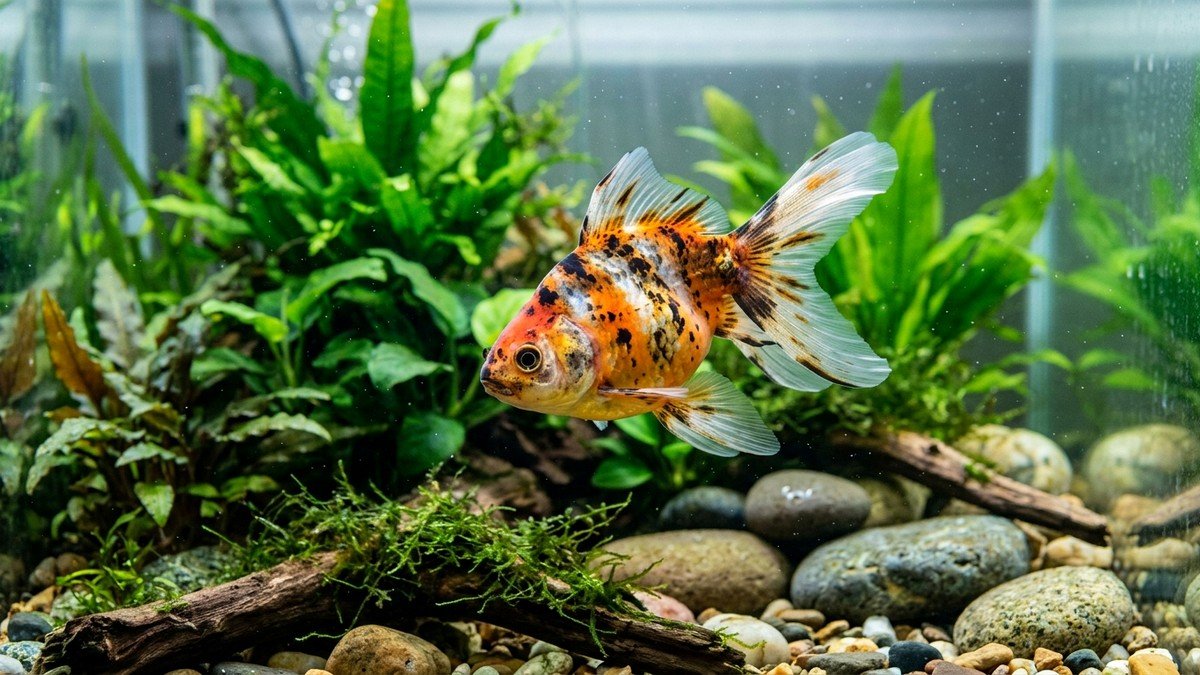
Walking up to your aquarium and spotting your beloved fish floating sideways, listing awkwardly at an angle, or struggling upside down at the surface is a distressing experience. This condition, commonly referred to as swim bladder disorder or positive buoyancy disorder, is one of the most frequent health dilemmas faced by aquarists. While seeing your fish upside down looks alarming, many causes are non-fatal and completely reversible with timely, appropriate care.
Key Anatomy Insight
The swim bladder is a gas-filled hydrostatic organ located in the dorsal abdominal cavity. By inflating or deflating this specialized organ with oxygen and nitrogen, a fish maintains neutral buoyancy, allowing it to hover motionless in the water column without sinking or floating.
1. The Primary Causes Behind Swim Bladder Dysfunction
Swim bladder disorder is not a standalone disease, but rather a clinical symptom of several underlying physiological problems:
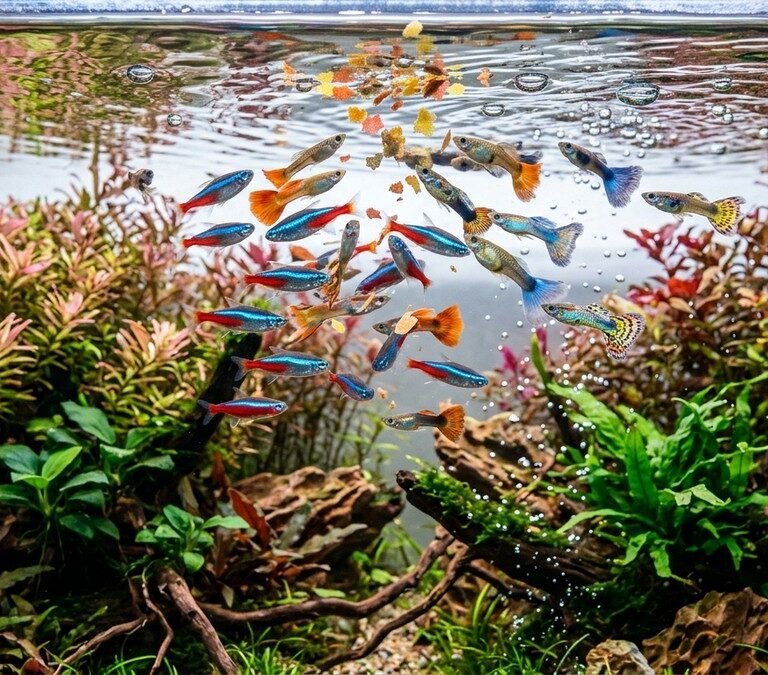
- Digestive Constipation and Gulping Air: Feeding dry floating flakes causes fish to gulp air at the water surface. Dry foods expand inside the stomach, and trapped air pockets exert direct mechanical pressure against the swim bladder, distorting its equilibrium.
- Bacterial or Parasitic Infection: Systemic bacterial infections can cause inflammation, thickening of the swim bladder membrane, or fluid accumulation within the bladder cavity.
- Water Temperature Shock: Cold aquarium water significantly slows a fish’s metabolic and digestive rates. Undigested food ferments in the gut, causing severe abdominal distension and loss of buoyancy control.
- Physical Injury or Trauma: Physical altercations with aggressive tankmates, rough handling during netting, or colliding with aquarium decor can rupture or bruise the delicate hydrostatic organ.
Buoyancy Disorder Diagnostic Comparison
Evaluate your fish’s posture and behavior to pinpoint the exact root cause:
| Observed Symptom | Likely Root Cause | Secondary Clues | Effective Treatment |
|---|---|---|---|
| Floating sideways at surface | Air gulping or constipation | Swollen belly, trailing stringy feces | Fast for 48 hours, then feed blanched pea |
| Sinking head-first to bottom | Bacterial swim bladder infection | Clamped fins, loss of appetite | Broad-spectrum antibiotic bath (Kanamycin) |
| Spinning and corkscrewing | Severe trauma or neurological shock | Physical scratches, rapid breathing | Shallow hospital tank, Epsom salt bath |
| Pineconing scales with sideways lean | Organ failure and fluid dropsy | Bulging eyes, severe fluid retention | Refer to specialized dropsy protocols |
2. Step-by-Step Home Treatment Protocol
Follow this sequential treatment plan when your fish exhibits swimming imbalance:
Step 1: Complete Fasting for 48 Hours
Immediately discontinue all commercial flakes, pellets, and freeze-dried foods. Withholding food allows the gastrointestinal tract to clear accumulated blockages naturally.
Step 2: Administer Boiled, De-Skinned Green Peas
On day three, boil a frozen green pea until soft. Pinch off and discard the fibrous outer skin, which is indigestible for fish. Cut the soft inner flesh into tiny pieces and feed one or two small pieces to the fish. The rich dietary fiber functions as a safe natural laxative.
Step 3: Gradually Elevate Aquarium Temperature
Gradually increase the water temperature by one to two degrees Fahrenheit per day until reaching 78 to 80 degrees Fahrenheit (for tropical species and goldfish). Warmer water speeds up gut peristalsis and accelerates digestion.
Step 4: Epsom Salt Immersion Bath
Pure magnesium sulfate (plain Epsom salt without scents or additives) acts as a muscle relaxant and mild osmotic laxative. Dissolve one tablespoon per five gallons of hospital tank water to reduce internal fluid buildup around the bladder.
Related Fish Health & Wellness Guides
Protect your aquatic pets from common health hazards with our proven tutorials:
5. Selective Breeding and Compressed Feline Anatomy
Why do fancy goldfish (Ranchus, Orandas, Ryukins, and Fantails) suffer from swim bladder disorder ten times more frequently than wild-type common goldfish or comets? The answer lies in centuries of artificial selective breeding:
- Lordotic Spinal Compression: Human breeders favored extremely short, round, egg-shaped bodies. To achieve this compact spherical silhouette, the vertebral column is sharply curved (lordosis), drastically reducing the volume of the abdominal coelomic cavity.
- Internal Organ Crowding: In fancy goldfish, the stomach, liver, reproductive ovaries, and double-chambered swim bladder are compressed into a tight space. A minor pocket of dietary gas or mild intestinal food swelling physically pinches the pneumatic duct, preventing the fish from releasing gas.
- Lack of Hydrodynamic Trim: Without the streamlined elongated fuselage of wild carps, egg-shaped fancy goldfish lack hydrodynamic stability, leaving them prone to tumbling upside down at the slightest buoyancy imbalance.
6. Bacterial Aeromonas Septicemia vs Dietary Constipation
Aquarists must differentiate between simple food compaction and dangerous bacterial swim bladder infection:
- Dietary Constipation Indicators: The fish remains alert, has bright clear eyes, actively searches for food, but floats upside down or lists sideways. Swelling is centered strictly along the mid-ventral abdomen. Resolves with 48 hours of fasting and high-fiber green peas.
- Infectious Bacterial Indicators: The fish is lethargic, displays clamped dorsal and pectoral fins, refuses all food, and exhibits red streaking along the fin rays or ventral abdomen (petechial hemorrhages from Aeromonas or Pseudomonas septicemia). The swim bladder organ fills with purulent fluid, requiring immediate antibiotic therapy.
7. Safe Antibiotic Bath Protocols for Systemic Infections
When green peas and fasting fail to correct swimming balance after four days, assume a bacterial component and initiate medical treatment in a separate hospital tank:
- Kanamycin Sulfate (Seachem Kanaplex): A broad-spectrum systemic aminoglycoside antibiotic absorbed directly through the skin and gill membranes into internal tissues, effectively clearing gram-negative bacteria colonizing the swim bladder.
- Medicated Food Preparation: If the fish is still eating, mix one scoop of Kanaplex with a tablespoon of frozen brine shrimp or thawed green pea mash bound with Seachem Focus. Ingesting antibiotics internally provides tenfold greater efficacy than water column dosing alone.
- Epsom Salt Osmotic Relief: Add pure magnesium sulfate at one tablespoon per five gallons of hospital tank water. Magnesium relaxes smooth muscle tissue along the intestinal tract and draws excess fluid out of swollen tissues.
8. Designing a Low-Depth Hospital Recovery Tank
Leaving a buoyant, sideways-floating fish in a deep main aquarium causes fatal exhaustion as the fish struggles against water currents. Set up a dedicated recovery sanctuary:
- Lower Water Depth to 5 to 6 Inches: Shallow water reduces hydrostatic pressure and lets the floating fish touch down easily to rest without constant fin paddling.
- Baffle Water Current: Turn off high-velocity powerheads. Use a gentle sponge filter driven by a low-flow air pump so the fish is not tossed around like a cork.
- Prevent Surface Air Desiccation: When a fish floats upside down, their exposed belly skin can dry out and develop fungal infections. Maintain high aquarium humidity by keeping the tank lid tightly sealed.
Frequently Asked Questions (FAQs)
1. Can a fish recover from swimming sideways?
Yes, many fish recover fully, especially when swimming sideways is caused by dietary constipation, gas buildup, or sudden temperature drops. Bacterial swim bladder infections require targeted antibiotic interventions.
2. How do cooked green peas cure swim bladder issues?
Peeled cooked green peas act as a high-fiber natural laxative. The fiber passes quickly through the fish digestive tract, expelling impacted food and gas pockets that press directly against the swim bladder organ.
3. Why are fancy goldfish particularly prone to swim bladder disorder?
Centuries of selective breeding have compressed the spine and internal organs of fancy goldfish into a rounded egg-shaped body. This compact anatomy places the stomach directly against the swim bladder, making them vulnerable to displacement.
4. Should I lower the water level in the hospital tank for a floating fish?
Yes. Lowering the water level to five or six inches reduces hydrostatic water pressure, prevents the fish from exhausting itself trying to dive, and makes breathing and feeding substantially easier.
5. Can poor water quality cause a fish to lose its balance?
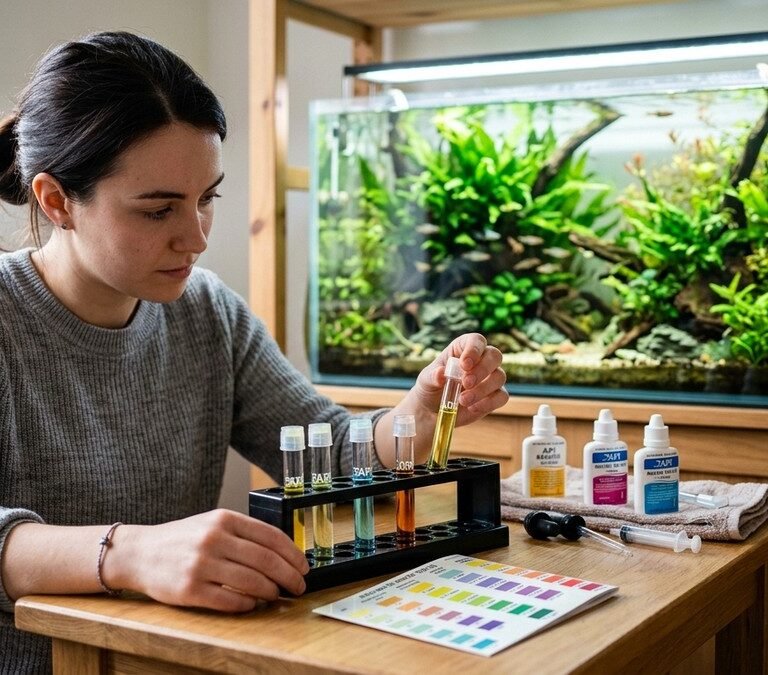
Yes. Elevated ammonia and nitrite levels damage internal nervous systems and organ function, causing disorientation, weakness, and loss of buoyancy control.
6. How do I feed a pea to my sick fish?
Thaw a frozen green pea, boil or microwave it in water for 30 seconds until soft, remove the tough outer skin completely, and crush the soft inner halves into bite-sized morsels before dropping them near the fish.
Why should you never feed floating dry flakes to fancy goldfish?
Gulping floating dry flakes forces the fish to swallow air bubbles at the surface. As the dry flakes absorb water in the stomach, they expand, trapping air against the pneumatic duct and triggering immediate buoyancy loss.
Can a swim bladder problem become permanent in a pet fish?
Yes. Severe physical trauma, irreversible organ scarring, or congenital spine deformities can cause permanent buoyancy loss. In such cases, fish can live happily in specialized shallow tanks with sinking diets.