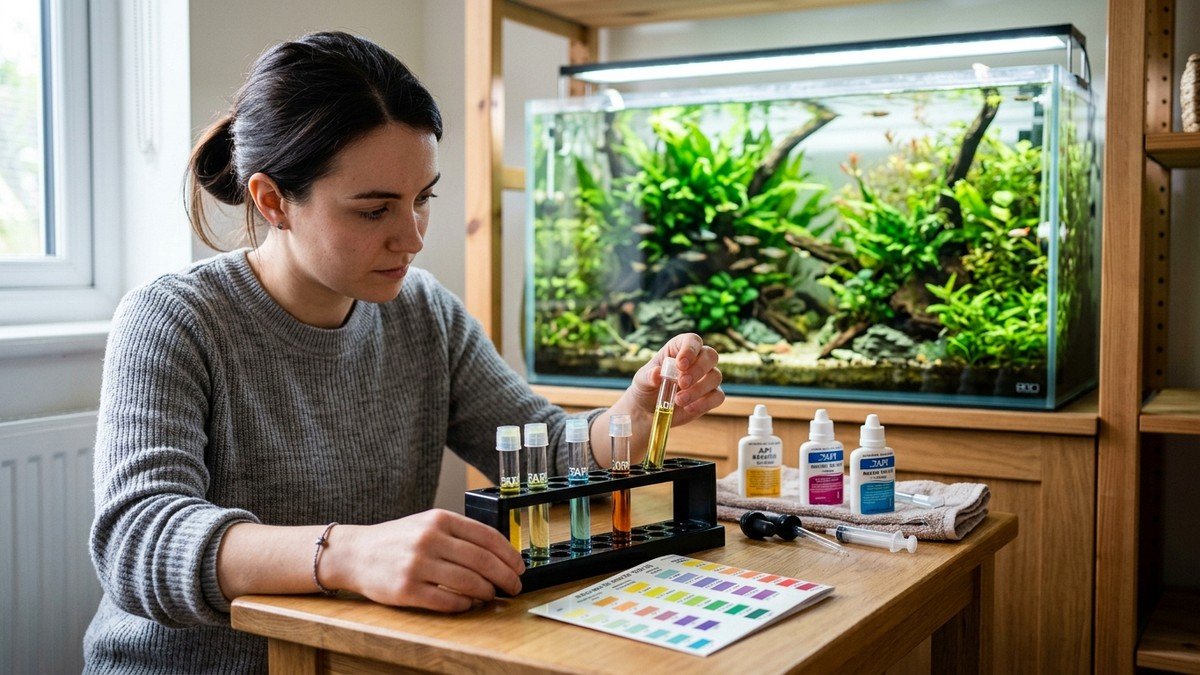
Testing your aquarium water only to watch the test tube turn a dark shade of green signifying elevated ammonia is every fish keeper’s worst nightmare. Ammonia is an invisible, odorless, and highly toxic metabolic byproduct that can devastate aquatic life within hours. Whether you are battling new tank syndrome or dealing with an unexpected spike in an established aquarium, knowing how to lower ammonia in a fish tank quickly can mean the difference between life and death for your livestock.
Emergency Action Rule
If your water test indicates total ammonia levels above 1.0 ppm, execute an immediate 50 percent partial water change. Always ensure replacement water matches the aquarium temperature and is treated with a proven dechlorinator capable of detoxifying ammonia compounds.
1. Immediate Emergency Protocol for Dangerous Spikes
When ammonia levels exceed safe parameters (anything above 0.0 ppm), time is critical. Follow this sequenced emergency protocol to protect your fish immediately:
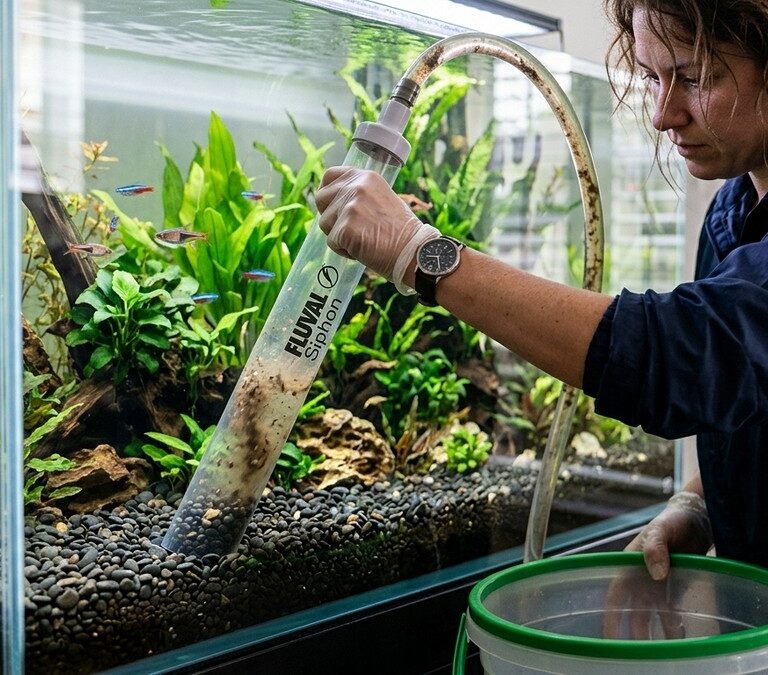
- Perform a 30 to 50 Percent Water Change: Siphon water from the bottom substrate to remove organic waste while lowering the overall toxin dilution. Match the replacement water temperature within one degree to avoid osmotic or thermal shock.
- Dose an Ammonia Detoxifier: Add a concentrated detoxifier such as Seachem Prime or Fritz Complete at standard or double dosage. These compounds chemically bind free ammonia into safe ammonium for up to 48 hours without starving biological filters.
- Increase Surface Aeration: Ammonia toxicity damages gill tissues and impairs blood oxygenation. Run an air pump with an airstone or position filter returns near the water line to maximize surface agitation and gas exchange.
- Cease All Feeding: Stop feeding completely for 48 hours. Fish can easily survive several days without nutrition, whereas uneaten food and fresh waste will fuel higher ammonia spikes.
2. Understanding Ammonia Chemistry: NH3 vs NH4+
Standard aquarium liquid test kits measure Total Ammonia Nitrogen (TAN), which consists of two distinct chemical forms: unionized free ammonia (NH3) and ionized ammonium (NH4+). The relationship between these two forms depends directly on water pH and temperature.
Free ammonia (NH3) is a lethal gas that readily passes through gill membranes, burning respiratory filaments and causing organ failure. Conversely, ammonium (NH4+) is a charged ion that cannot easily enter fish tissue and is relatively non-toxic. In acidic aquariums with a pH below 6.8, virtually all TAN exists as ammonium. In alkaline aquariums with a pH above 8.0 (such as African cichlid or marine setups), a substantial fraction converts into lethal NH3.
Toxicity Thresholds and Action Levels
Reference this standard aquarium parameter guide to evaluate risk levels based on total ammonia testing:
| Ammonia Reading (ppm) | Toxicity Severity | Impact on Fish | Required Intervention |
|---|---|---|---|
| 0.00 ppm | Zero (Ideal) | Optimal health, normal respiration | Maintain routine maintenance schedule |
| 0.25 ppm | Low to Moderate | Mild stress, increased slime coat secretion | 25% water change, monitor feeding |
| 0.50 to 1.00 ppm | Dangerous | Gill inflammation, surface gasping, lethargy | 50% water change, add ammonia binder |
| 2.00+ ppm | Lethal Emergency | Acute poisoning, internal hemorrhaging, death | Immediate 75% water change, repeat daily |
3. Common Root Causes of Ammonia Spikes
Lowering ammonia temporarily through water changes solves the symptom, but you must identify and fix the underlying catalyst to prevent recurrence:
- Unestablished Biological Filter (New Tank Syndrome): Adding fish before colonies of Nitrosomonas bacteria establish leaves the tank incapable of processing waste. Review our detailed walkthrough on how to cycle a fish tank properly to avoid biological crashes.
- Overfeeding and Uneaten Waste: Food flakes sinking into substrate decay into large amounts of organic nitrogen. This decay is also a primary cause behind why your fish tank turns cloudy.
- Decaying Hidden Livestock: A deceased snail, shrimp, or small schooling fish hidden behind driftwood or rocks will decompose rapidly, generating severe toxic spikes.
- Chlorinated Tap Water in Filter Media: Washing filter sponges under untreated municipal tap water exposes nitrifying bacteria to chlorine and chloramines, wiping out the colony within seconds.
4. Long-Term Biological Solutions
To maintain zero ammonia permanently, cultivate robust biological filtration mechanisms:
Seed with Live Nitrifying Bacteria
High-grade commercial bacterial supplements (such as FritzZyme 7 or Tetra SafeStart) introduce dormant or active autotrophic nitrifiers directly into your filter media. Dose bacteria directly over your ceramic rings or porous bio-sponges.
Introduce Fast-Growing Live Aquatic Plants
Live floating plants such as Amazon Frogbit, Salvinia, and Water Lettuce, as well as fast-growing stem plants like Hornwort, prefer ammonia over nitrate as their primary nitrogen source. They act as biological sponges, actively stripping ammonia out of the water column.
Essential Aquarium Water Quality Guides
Deepen your aquarium husbandry knowledge with our essential care resources:
5. The pH and Temperature Equation: Unionized NH3 vs Ionized NH4+
When evaluating an ammonia spike, understanding the chemical equilibrium between unionized toxic free ammonia (NH3) and relatively safe ionized ammonium (NH4+) is essential for life-or-death decisions:
- The Impact of Water pH: In acidic aquariums with a pH of 6.5, less than 0.2 percent of total ammonia exists in the lethal NH3 form; virtually all of it is converted into benign NH4+. However, in an African cichlid or saltwater aquarium at pH 8.4, over 15 percent of total ammonia exists as lethal NH3 gas.
- The pH Shock Danger: Never perform massive tap water changes without checking pH. If your aquarium water has acidified to pH 6.2 and tap water is pH 8.0, refilling the tank suddenly raises the pH, instantly transforming safe ammonium into lethal unionized ammonia that burns gills within minutes.
- Temperature Acceleration: Warmer water accelerates chemical kinetics, increasing the proportion of unionized ammonia while reducing the water’s oxygen-carrying capacity.
6. Emergency Chemical Adsorbents: Zeolite and Synthetic Resins
When mechanical water changes cannot keep up with high biological waste production, chemical filtration media provide immediate physical adsorption:
- Aquarium Clinoptilolite Zeolite: A natural porous volcanic mineral with an intense electrostatic attraction for ammonium ions. Placing a mesh bag of zeolite into your power filter strips ammonium from the water column within hours. Note: Zeolite is only effective in freshwater; sodium ions in marine or brackish water release bound ammonia back into the tank.
- Synthetic Polymer Resins (Seachem Purigen): Macroporous synthetic polymers adsorb soluble and insoluble nitrogenous organic compounds (decaying proteins, waste, and amines) before they can break down into ammonia.
- Poly-Filter Media Pads: Patented chemical filter pads absorb heavy metals, organic pollutants, and free ammonia, changing color from white to yellow and brown as they exhaust.
7. Safe Bio-Filter Reboot Without Crashing the Tank
If your biological filter crashed due to a power outage or accidental tap water rinse, follow this structured reboot sequence:
- Acquire Squeezed Bio-Sponge Mulm: The fastest way to jumpstart a crashed aquarium is transferring an established filter sponge or biological ceramic media from a disease-free existing aquarium. Live biofilm contains active, working colonies of Nitrosomonas and Nitrospira bacteria.
- Dose True Autotrophic Bacteria: Choose bottled bacteria verified to contain live autotrophic strains (such as FritzZyme 7 or DrTim’s One and Only) rather than generic heterotrophic sludge removers. Pour the bacteria directly onto the filter biomedia with the flow turned off for 15 minutes.
- Maintain High Dissolved Oxygen: Nitrifying bacteria are obligate aerobes that consume vast amounts of dissolved oxygen while converting ammonia to nitrite and nitrate. Run maximum surface agitation to fuel their rapid colonization.
8. The Dangers of Deep Substrate Anaerobic Pockets
In deep sand or gravel beds neglected for months, oxygen cannot penetrate deeper than two inches. In these hypoxic layers, heterotrophic bacteria turn to sulfur compounds for cellular respiration, producing deadly hydrogen sulfide (H2S) gas:
When an aquarist suddenly stirs deep neglected substrate during a water change, trapped pockets of black sand and rotten-egg smelling hydrogen sulfide erupt into the water column. Hydrogen sulfide paralyzes fish gill cellular respiration and binds with beneficial bio-colonies, triggering catastrophic ammonia spikes. Always vacuum substrate systematically in small zones rather than churning the entire floor at once.
5. The pH and Temperature Equation: Unionized NH3 vs Ionized NH4+
When evaluating an ammonia spike, understanding the chemical equilibrium between unionized toxic free ammonia (NH3) and relatively safe ionized ammonium (NH4+) is essential for life-or-death decisions:
- The Impact of Water pH: In acidic aquariums with a pH of 6.5, less than 0.2 percent of total ammonia exists in the lethal NH3 form; virtually all of it is converted into benign NH4+. However, in an African cichlid or saltwater aquarium at pH 8.4, over 15 percent of total ammonia exists as lethal NH3 gas.
- The pH Shock Danger: Never perform massive tap water changes without checking pH. If your aquarium water has acidified to pH 6.2 and tap water is pH 8.0, refilling the tank suddenly raises the pH, instantly transforming safe ammonium into lethal unionized ammonia that burns gills within minutes.
- Temperature Acceleration: Warmer water accelerates chemical kinetics, increasing the proportion of unionized ammonia while reducing the water’s oxygen-carrying capacity.
6. Emergency Chemical Adsorbents: Zeolite and Synthetic Resins
When mechanical water changes cannot keep up with high biological waste production, chemical filtration media provide immediate physical adsorption:
- Aquarium Clinoptilolite Zeolite: A natural porous volcanic mineral with an intense electrostatic attraction for ammonium ions. Placing a mesh bag of zeolite into your power filter strips ammonium from the water column within hours. Note: Zeolite is only effective in freshwater; sodium ions in marine or brackish water release bound ammonia back into the tank.
- Synthetic Polymer Resins (Seachem Purigen): Macroporous synthetic polymers adsorb soluble and insoluble nitrogenous organic compounds (decaying proteins, waste, and amines) before they can break down into ammonia.
- Poly-Filter Media Pads: Patented chemical filter pads absorb heavy metals, organic pollutants, and free ammonia, changing color from white to yellow and brown as they exhaust.
7. Safe Bio-Filter Reboot Without Crashing the Tank
If your biological filter crashed due to a power outage or accidental tap water rinse, follow this structured reboot sequence:
- Acquire Squeezed Bio-Sponge Mulm: The fastest way to jumpstart a crashed aquarium is transferring an established filter sponge or biological ceramic media from a disease-free existing aquarium. Live biofilm contains active, working colonies of Nitrosomonas and Nitrospira bacteria.
- Dose True Autotrophic Bacteria: Choose bottled bacteria verified to contain live autotrophic strains (such as FritzZyme 7 or DrTim’s One and Only) rather than generic heterotrophic sludge removers. Pour the bacteria directly onto the filter biomedia with the flow turned off for 15 minutes.
- Maintain High Dissolved Oxygen: Nitrifying bacteria are obligate aerobes that consume vast amounts of dissolved oxygen while converting ammonia to nitrite and nitrate. Run maximum surface agitation to fuel their rapid colonization.
8. The Dangers of Deep Substrate Anaerobic Pockets
In deep sand or gravel beds neglected for months, oxygen cannot penetrate deeper than two inches. In these hypoxic layers, heterotrophic bacteria turn to sulfur compounds for cellular respiration, producing deadly hydrogen sulfide (H2S) gas:
When an aquarist suddenly stirs deep neglected substrate during a water change, trapped pockets of black sand and rotten-egg smelling hydrogen sulfide erupt into the water column. Hydrogen sulfide paralyzes fish gill cellular respiration and binds with beneficial bio-colonies, triggering catastrophic ammonia spikes. Always vacuum substrate systematically in small zones rather than churning the entire floor at once.
Frequently Asked Questions (FAQs)
1. What is the fastest way to lower ammonia in an aquarium?
Performing an immediate 30 to 50 percent partial water change with temperature-matched, dechlorinated water is the fastest physical method to reduce toxic ammonia concentrations.
2. Can water conditioner neutralize ammonia immediately?
Yes. Premium water conditioners containing sodium hydroxymethanesulfonate, such as Seachem Prime, bind toxic free ammonia (NH3) into harmless non-toxic ammonium ions (NH4+) for up to 48 hours without disrupting the biological filter.
3. What are the first physical signs of ammonia poisoning in fish?
The earliest indicators include gasping for air at the water surface, rapid or labored gill movement, inflamed red or purple gills, clamped fins, lethargy, and erratic darting across the tank.
4. Does pH affect how toxic ammonia is to fish?
Yes, dramatically. At higher alkaline pH levels (above 7.6), a substantially higher percentage of total ammonia exists as deadly unionized free ammonia (NH3). At acidic pH levels (below 7.0), most ammonia converts into relatively benign ionized ammonium (NH4+).
5. Should you change your filter media during an ammonia spike?
No, never replace filter sponges or biological media during an ammonia spike. Discarding filter pads removes the crucial colonies of Nitrosomonas bacteria needed to consume the ammonia. Only gently rinse pads in a bucket of siphon water if clogged.
6. How long does it take for beneficial bacteria to clear ammonia naturally?
In a fresh uncycled aquarium, establishing a complete biological colony typically takes four to six weeks. Dosing bottled live nitrifying bacteria can accelerate this stabilization down to seven to ten days.
Why does my aquarium test kit show ammonia after dosing water conditioner?
Most standard liquid test kits (Nessler or Salicylate reagents) detect both toxic free ammonia (NH3) and safe ionized ammonium (NH4+). Detoxifiers convert NH3 to NH4+, keeping fish safe while the test still registers total nitrogen.
Can live floating plants strip ammonia faster than bio-filters?
Yes. Fast-growing floating plants like Amazon Frogbit, Duckweed, and Salvinia have immediate access to atmospheric carbon dioxide, allowing them to absorb ammonia directly through their roots faster than submerged bio-media.
Why does my aquarium test kit show ammonia after dosing water conditioner?
Most standard liquid test kits (Nessler or Salicylate reagents) detect both toxic free ammonia (NH3) and safe ionized ammonium (NH4+). Detoxifiers convert NH3 to NH4+, keeping fish safe while the test still registers total nitrogen.
Can live floating plants strip ammonia faster than bio-filters?
Yes. Fast-growing floating plants like Amazon Frogbit, Duckweed, and Salvinia have immediate access to atmospheric carbon dioxide, allowing them to absorb ammonia directly through their roots faster than submerged bio-media.