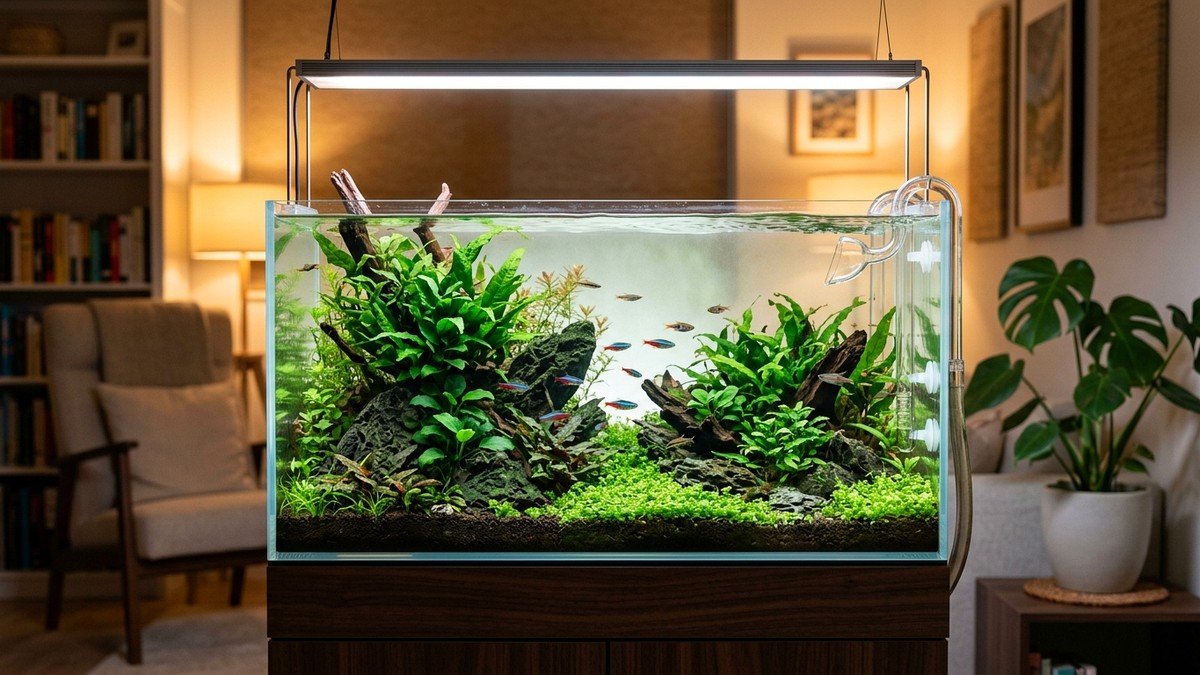
Setting up a new aquarium is an exciting milestone, but introducing fish immediately into freshly poured tap water is the single most common cause of early fish mortality. Known in the hobby as New Tank Syndrome, uncycled aquariums lack the essential biological filter needed to neutralize toxic organic waste. Cycling an aquarium is the foundational biological process of establishing thriving colonies of beneficial nitrifying bacteria that transform invisible toxins into harmless compounds.
The Biological Science Behind the Nitrogen Cycle
In an enclosed glass aquarium, fish waste, respired ammonia, and uneaten fish food decompose rapidly. The Nitrogen Cycle converts these compounds across three essential biochemical stages:
- Stage 1: Ammonia (NH3 / NH4+): Decomposing organic matter and fish respiration release raw ammonia. At concentrations as low as 0.25 parts per million (ppm), ammonia burns fish gills, damages internal organs, and suffocates aquatic life.
- Stage 2: Nitrite (NO2-): As ammonia accumulates, aerobic bacteria known as Nitrosomonas multiply, consuming ammonia and converting it into nitrite. While this marks progress, nitrite is equally lethal, binding to hemoglobin in fish blood and blocking oxygen transport (brown blood disease).
- Stage 3: Nitrate (NO3-): Next, a second bacterial colony, predominantly Nitrospira, oxidizes toxic nitrite into relatively harmless nitrate. Fish tolerate nitrate up to 20 to 40 ppm without adverse health effects.
- Stage 4: Nitrate Export: Unlike ammonia and nitrite, nitrate does not break down aerated aquarium water. It is exported from the tank through regular weekly 20% to 25% water changes and absorption by live aquatic plants.
Beneficial Bacteria Habitat: Contrary to popular belief, beneficial bacteria do not float in the water column. They colonize porous surfaces with high oxygen flow, primarily residing inside your filter sponge, ceramic rings, and substrate gravel.
Step-by-Step Fishless Cycling Protocol
Fishless cycling is the most humane, efficient, and reliable method to prepare a new tank without subjecting live animals to toxic chemical spikes. Follow this proven protocol:
- Set Up Hardware and Condition Water: Install your filter, heater (set between 78 and 82 degrees Fahrenheit to accelerate bacterial metabolism), and aeration. Fill the tank with tap water treated with a dechlorinator to neutralize chlorine and chloramines that kill bacteria.
- Dose Pure Ammonia: Add pure household ammonia (free of fragrances or surfactants) or liquid aquarium cycling ammonia until your test kit reads 2.0 to 4.0 ppm ammonia.
- Seed Beneficial Bacteria (Optional): To shorten the cycling duration from 6 weeks to 2 to 3 weeks, add a bottle of reputable live nitrifying bacteria culture or obtain a handful of established filter sponge media from a healthy, disease-free aquarium.
- Monitor Nitrite Spikes (Days 7 to 14): Test water every 48 hours. As ammonia begins dropping, nitrite levels will climb sharply, often exceeding the test kit’s maximum reading.
- Monitor Nitrate Production (Days 14 to 28): Continue testing. As nitrite converts to nitrate, nitrite drops toward 0 ppm while nitrate levels rise significantly.
- The 24-Hour Clearance Test: Once ammonia and nitrite read 0 ppm, dose ammonia back to 2.0 ppm. If your filter converts 2.0 ppm ammonia completely into 0 ppm ammonia and 0 ppm nitrite within 24 hours, your tank is fully cycled!
- Perform Pre-Stocking Water Change: Perform a 50% water change to lower accumulated nitrates below 20 ppm before introducing your new fish.
Aquarium Cycling Timeline and Water Parameters
Track your aquarium’s chemical progression across standard cycling milestones:
| Phase | Timeline | Ammonia (NH3) | Nitrite (NO2) | Nitrate (NO3) |
|---|---|---|---|---|
| Phase 1: Ammonia Introduction | Days 1 to 7 | 2.0 to 4.0 ppm | 0 ppm | 0 ppm |
| Phase 2: Nitrite Peak | Days 8 to 18 | Declining to 0.5 ppm | Spike (2.0 to 5.0 ppm) | 5 to 10 ppm |
| Phase 3: Nitrite Conversion | Days 19 to 30 | 0 ppm | Declining to 0 ppm | Rising (20 to 40 ppm) |
| Phase 4: Fully Cycled | Days 25 to 42 | 0 ppm (Clears in 24h) | 0 ppm | 5 to 20 ppm (Post-water change) |
Critical Cycling Mistakes to Avoid
Avoid these common missteps that stall or reset the biological cycling process:
- Throwing Away Filter Cartridges: Filter manufacturers often instruct hobbyists to replace filter cartridges monthly. Doing so discards 90% of your established beneficial bacteria colony, crashing the cycle and triggering deadly ammonia spikes. Simply rinse sponges in old tank water.
- Rinsing Media in Untreated Tap Water: The chlorine and chloramine in municipal tap water are designed to kill bacteria. Rinsing your filter sponge in tap water sterilizes the biological filter instantly.
- Stocking Too Many Fish at Once: A newly cycled aquarium possesses enough bacteria to process the waste of a few fish. Adding dozens of fish simultaneously overwhelms the biological filter. Add species gradually over several weeks. Explore our guide on the 10 Best Freshwater Fish for Beginners for hardy initial choices.
Explore More Aquatic Care Guides on MyPetVista
Master your freshwater aquarium parameters and species care:
Frequently Asked Questions (FAQs)
1. How long does it take to cycle a fish tank from scratch?
Cycling an aquarium completely from scratch typically requires 4 to 6 weeks. Using established filter media (seeded media) from an existing mature tank or high-potency bottled nitrifying bacteria can reduce this timeframe to 10 to 18 days.
2. Can I cycle an aquarium with fish inside?
While fish-in cycling is possible, it is stressful and potentially lethal for the fish. It requires daily 50% water changes and regular doses of ammonia-binding water conditioners to prevent gill damage. Fishless cycling with pure ammonia is vastly safer and more humane.
3. How do I know for sure when my aquarium is cycled?
Your tank is 100% cycled when it can completely convert 2.0 ppm of ammonia into 0 ppm ammonia and 0 ppm nitrite within 24 hours, with detectable nitrates present in the water.
4. Do live aquarium plants help cycle a fish tank faster?
Yes. Fast-growing live aquatic plants (such as Hornwort, Anacharis, and Java Moss) consume ammonia and nitrate directly as fertilizer. Live plants also introduce beneficial biofilm and bacteria that stabilize water parameters rapidly.
5. Why is my cycling aquarium water cloudy or milky?
Milky or cloudy water during cycling is a bacterial bloom. As heterotrophic bacteria multiply exponentially in the water column to consume dissolved nutrients, cloudiness appears. Do not use chemicals or panic; the water will clear naturally in 3 to 5 days as nitrifying bacteria settle onto surfaces.
6. What should my water parameters be before adding fish?
Before adding fish, ammonia must be 0 ppm, nitrite must be 0 ppm, and nitrate should be under 20 ppm. The water temperature and pH should be stable and matched to your chosen fish species.