Starting a freshwater aquarium is one of the most rewarding hobbies, offering a tranquil window into aquatic life right inside your home. However, beginner aquarists often face steep learning curves when selecting species that can thrive while the biological ecosystem stabilizes. Choosing hardy, peaceful, and adaptable fish ensures a resilient tank environment and prevents early disappointments. In this comprehensive guide, we review the ten best freshwater fish for beginners, detailing their care requirements, ideal water parameters, and peaceful community compatibility.
Key Criteria for Beginner Freshwater Fish
Before introducing fish into your aquarium, it is critical to understand what makes a species suitable for newcomers. A true beginner species possesses several physiological and behavioral traits:
- Broad Parameter Tolerance: They adapt well to reasonable fluctuations in water temperature, pH, and water hardness without experiencing acute stress.
- Hardiness Against Trace Compounds: While all fish need clean water, beginner-friendly species tolerate minor, brief ammonia or nitrite spikes that can occur during biological filter establishment.
- Peaceful Temperament: They do not display territorial aggression or fin-nipping behavior toward tank mates.
- Simple Dietary Needs: They readily accept high-quality commercial flakes, micropellets, and standard freeze-dried foods.
Aquarium Cycling Rule: Always cycle your aquarium for 3 to 6 weeks before purchasing fish. Establishing beneficial nitrifying bacteria (the Nitrogen Cycle) converts toxic ammonia and nitrite into harmless nitrate, ensuring your fish thrive from day one.
Top 10 Beginner Freshwater Fish
1. Neon Tetra (Paracheirodon innesi)
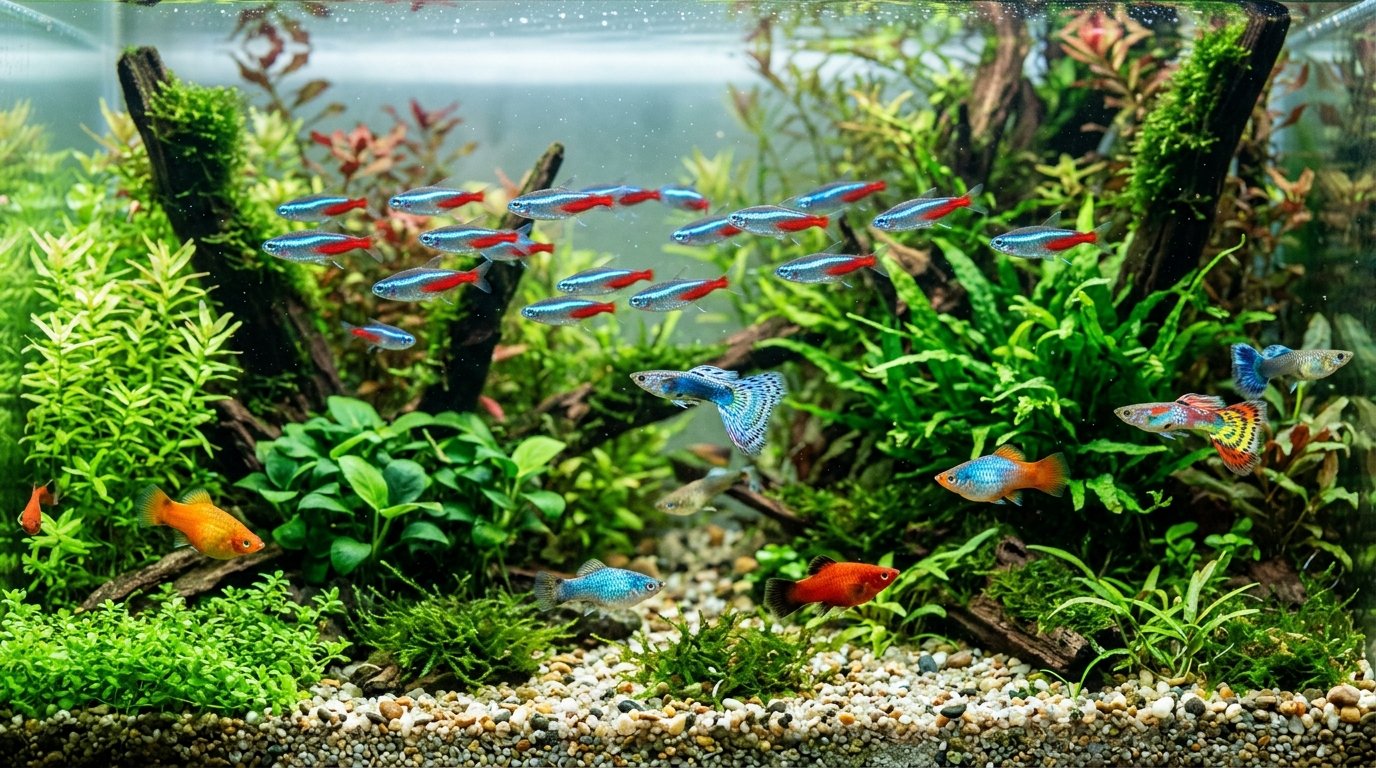
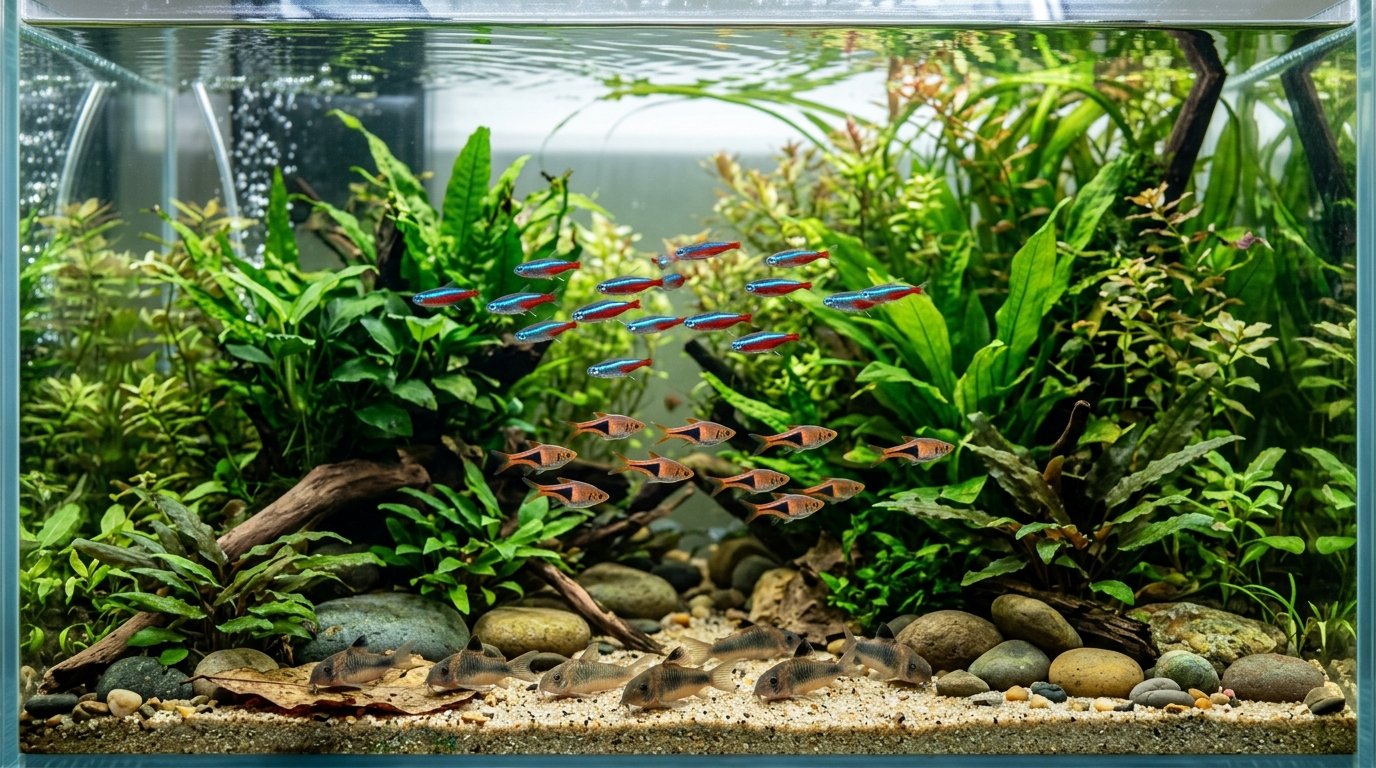
Neon Tetras are among the most iconic tropical aquarium fish worldwide. Their iridescent horizontal blue stripe and vibrant red tail add striking movement to any planted tank. Neon Tetras are schooling fish and must be kept in groups of at least 6 to 10 individuals to reduce stress and encourage natural swimming behavior. They prefer planted tanks with subdued lighting and stable, slightly acidic to neutral water.
2. Guppy (Poecilia reticulata)
Guppies are celebrated for their dazzling color variations, flowing caudal fins, and active, curious personalities. As livebearers, female guppies give birth to free-swimming fry rather than laying eggs. They are exceptionally hardy and thrive across a wide range of water conditions. If you prefer to avoid rapid population growth in your aquarium, keep an all-male group, which also showcases the brightest colors.
3. Platy (Xiphophorus maculatus)
Platies are sturdy, colorful livebearers available in vibrant red, orange, yellow, and calico patterns. They are robust feeders that readily graze on biofilm and soft algae in addition to standard flake food. Platies are peaceful, making them ideal companions for tetras, rasboras, and corydoras in tanks of 10 gallons or larger.
4. Zebra Danio (Danio rerio)
Zebra Danios are virtually unmatched in terms of hardiness. Their horizontal metallic stripes and energetic swimming make the upper water column vibrant. They tolerate cooler water temperatures (64 to 75 degrees Fahrenheit), meaning they can often be kept in unheated indoor tanks in temperate climates. Danios are fast swimmers that require open horizontal swimming space and should be kept in schools of 6 or more.
5. Harlequin Rasbora (Trigonostigma heteromorpha)
Harlequin Rasboras feature a distinctive triangular black patch on an iridescent copper-pink body. They are one of the tightest schooling fish available in the hobby, creating mesmerizing synchronized swimming displays. Gentle and non-demanding, they pair well with small tetras and bottom-dwelling catfish in planted aquariums.
6. Corydoras Catfish (Corydoras spp.)
Corydoras (such as Bronze, Albino, and Panda Corys) are peaceful, armored bottom dwellers that spend their day scavenging the substrate for leftover food. Their charming social behavior and whisker-like barbels make them beloved aquarium pets. Because their barbels are sensitive to sharp gravel, keep them on smooth sand substrates in groups of at least 4 to 6.
7. Cherry Barb (Puntius titteya)
Unlike some notorious nippy barb species like Tiger Barbs, Cherry Barbs are calm, peaceful, and gentle. Males develop an intense, radiant cherry-red coloration, especially in well-planted setups with dark substrates. They prefer swimming in the lower to middle water strata and thrive when provided with plant cover and stable water parameters.
8. Bristlenose Pleco (Ancistrus cirrhosus)
Common Plecos sold in pet stores often grow over 15 to 20 inches, outgrowing home aquariums. The Bristlenose Pleco, in contrast, tops out at a manageable 4 to 5 inches. They are voracious algae eaters, spending their time suctioned to glass, driftwood, and rocks. They require natural driftwood in the aquarium to aid their digestive health and supplement their diet with sinking algae wafers.
9. Dwarf Gourami (Trichogaster lalius)
If you want a colorful centerpiece fish for a 15 to 20-gallon community tank, Dwarf Gouramis are an outstanding option. Similar to Betta fish, they possess a labyrinth organ that enables them to breathe surface oxygen. Their calm, deliberate movements and brilliant red and blue stripes bring an elegant focal point to calm community aquariums.
10. White Cloud Mountain Minnow (Tanichthys albonubes)
White Cloud Mountain Minnows are known as the poor person’s neon tetra due to their vibrant colors and rock-solid resilience. They thrive in unheated tanks (60 to 72 degrees Fahrenheit) and tolerate a wide range of water parameters. Their playful schooling behavior and resistance to common fish illnesses make them one of the easiest fish to maintain.
Beginner Freshwater Fish Comparison Table
Compare the size, minimum tank capacity, and temperature preferences for each beginner species:
| Species | Adult Size | Min Tank Size | Ideal Temp | Primary Swimming Level |
|---|---|---|---|---|
| Neon Tetra | 1.5 inches | 10 Gallons | 72 – 78 deg F | Middle |
| Guppy | 1.5 – 2 inches | 5 – 10 Gallons | 72 – 82 deg F | Top to Middle |
| Platy | 2 – 2.5 inches | 10 Gallons | 70 – 80 deg F | Middle to Surface |
| Zebra Danio | 2 inches | 10 Gallons | 64 – 75 deg F | Surface to Middle |
| Harlequin Rasbora | 1.75 inches | 10 Gallons | 73 – 82 deg F | Middle |
| Corydoras Catfish | 2 – 3 inches | 20 Gallons | 72 – 78 deg F | Substrate Bottom |
| Cherry Barb | 2 inches | 15 Gallons | 73 – 81 deg F | Middle to Bottom |
| Bristlenose Pleco | 4 – 5 inches | 25 Gallons | 73 – 81 deg F | Bottom, Glass, Wood |
| Dwarf Gourami | 3 – 3.5 inches | 15 Gallons | 75 – 82 deg F | Top to Middle |
| White Cloud Minnow | 1.5 inches | 10 Gallons | 60 – 72 deg F | Middle to Surface |
Essential Care Tips for Beginner Aquarists
To maintain a thriving, crystal clear aquarium, establish a disciplined maintenance routine from the beginning:
- Prevent Overfeeding: Feed only what your fish can consume completely within 2 minutes once or twice daily. Excess food decays rapidly, triggering harmful ammonia spikes and cloudy water.
- Perform Weekly Water Changes: Replace 20% to 25% of aquarium water each week using a gravel siphon to remove debris from the substrate. Always treat tap water with a quality water conditioner to eliminate chlorine and chloramines.
- Do Not Overclean Filter Media: Rinse filter sponges and biological media in removed aquarium water during water changes. Never rinse filter media in untreated tap water, as chlorine kills the beneficial bacteria colony.
- Acclimate New Fish Carefully: Float new fish bags in the tank for 15 minutes to equalize temperature, then gradually introduce small amounts of tank water over 30 minutes before gently netting the fish into the aquarium.
Explore More Aquatic and Pet Guides on MyPetVista
Deepen your understanding of aquatic habitats and pet wellness with our expert guides:
- Betta Fish Care for Beginners: Tank Setup and Feeding Guide
- Silver Dollar Fish Care: Tank Size, Diet, and Lifespan
- Can Fish See Air? The Science of Underwater Vision
- Safe and Toxic Foods for Pet Birds: Complete Nutritional Guide
- Why Do Dogs Eat Grass? Causes, Health Insights, and Remedies
- Why Do Cats Purr? The Science and Emotional Meaning
Frequently Asked Questions (FAQs)
1. What is the easiest freshwater fish to keep alive for beginners?
Zebra Danios, Platies, and Guppies are widely recognized as the easiest freshwater fish for beginners. They tolerate slight temperature shifts, accept standard flake foods, and display remarkable hardiness while aquarists learn proper water maintenance routines.
2. How many fish can I safely put in a 10-gallon aquarium?
In a standard 10-gallon tank, you can safely house 6 Neon Tetras or Zebra Danios alongside 1 to 2 Nerite snails, or a small group of 4 to 5 Platies. Avoid overstocking, as smaller water volumes accumulate toxic waste much faster than larger tanks.
3. Do beginner freshwater fish require an aquarium heater?
Tropical species like Neon Tetras, Guppies, and Dwarf Gouramis require a reliable submersible heater set between 74 and 78 degrees Fahrenheit. Coldwater species such as White Cloud Mountain Minnows and Zebra Danios can flourish at room temperature without a dedicated heater.
4. Can I mix livebearers like guppies and platies together?
Yes. Guppies and platies share identical water parameter requirements, peaceful temperaments, and omnivorous dietary preferences. They make great community companions provided the tank has adequate filtration and space.
5. How often should beginner aquarists change aquarium water?
Performing a 20% to 25% water change once every 7 to 10 days is ideal for community aquariums. Regular water changes replenish essential trace minerals and prevent the accumulation of nitrates, ensuring vibrant fish health.
6. Why is my new aquarium water cloudy or milky?
Cloudy or milky water in a newly established aquarium is typically a bacterial bloom. As beneficial bacteria reproduce to process organic compounds, microscopic water cloudiness is normal. Do not perform massive water changes or change filter pads; the water will clear naturally in 3 to 5 days.