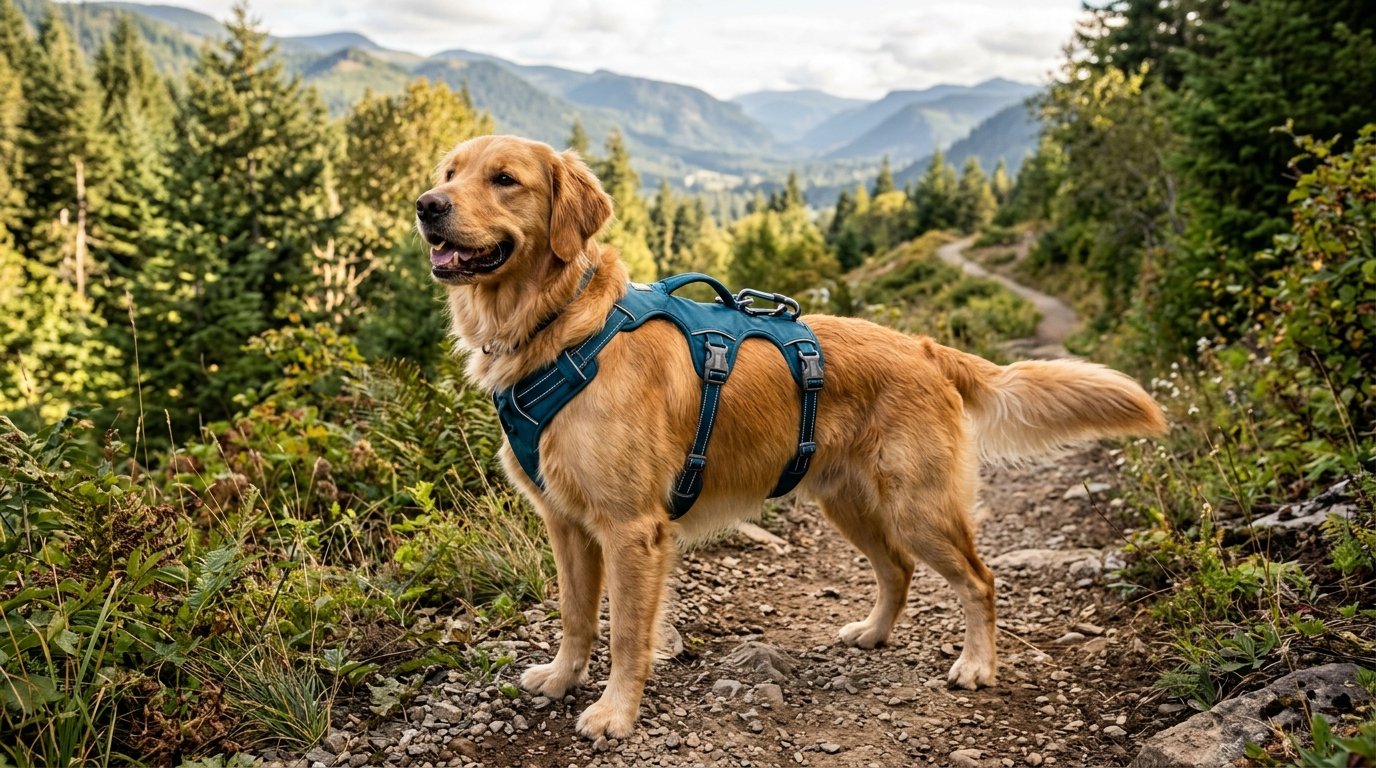
Walking a powerful, high-energy large breed dog—whether a 75-pound Labrador, a German Shepherd, or a Golden Retriever—is one of life’s greatest pleasures until leash pulling turns the daily routine into an exhausting physical battle. When a large dog surges forward at the sight of another animal or an exciting scent, they can generate hundreds of pounds of instantaneous kinetic pull force. For the handler, this often results in sore shoulders, back pain, and a loss of walking control.
More critically, traditional neck collars pose significant physiological risks when used on powerful pullers. Forceful pressure concentrated against a dog’s cervical spine and throat can damage the thyroid gland, compress delicate blood vessels leading to the eyes, and even cause permanent tracheal collapse. Understanding how modern, ergonomic no-pull harnesses function—and how to select, fit, and use one properly—is essential knowledge for every large dog owner seeking safe, stress-free walks.
The Science and Mechanics: How No-Pull Harnesses Actually Work
To understand why traditional walking gear fails with heavy pullers, it is necessary to examine canine biomechanics and the innate behavioral response known as the opposition reflex (Thigmotaxis). When pressure is applied to a dog’s back or neck, their natural neurological reaction is to lean into that pressure and push harder in the opposite direction. This is the exact principle that sled dogs utilize to pull heavy cargo across snow.
A back-clip harness or traditional collar actually assists a dog in pulling by giving them an anchored brace against which they can engage their hindquarters and chest muscles. In contrast, an engineered no-pull harness utilizes a front leash attachment located directly on the dog’s breastbone (manubrium). When the dog attempts to pull forward, the leash tension pivots their shoulders sideways toward the handler, redirecting their forward momentum without applying any choking force to the throat.
Comparison: Leading No-Pull Harness Designs for Large Breeds
Not all harness architectures serve the same purpose. The following comparative overview outlines the distinct engineering approaches, attachment points, and ideal applications across the most prominent designs available for large dogs:
| Design Category | Primary Attachment | Chest Construction | Key Biomechanical Advantage | Ideal Use Case |
|---|---|---|---|---|
| Dual-Clip Padded Vest | Chest D-Ring and Back Ring | Y-Shaped Padded Plate | Even pressure distribution with dual steering options | Everyday neighborhood walking and loose-leash training |
| All-Day Adventure Harness | Reinforced Front Loop and Back V-Ring | Extended Foam Ribcage Panels | Maximum comfort over long distances without friction hotspots | Hiking, trail running, and active outdoor excursions |
| Reinforced Webbing Halter | Heavy Steel Front Halter Ring | Broad Heavy-Duty Sternum Pad | Extreme tensile strength with crash-rated automotive security | Giant breeds, strong lungers, and vehicle travel |
| High-Visibility Control Vest | Zinc Alloy O-Ring and Back Ring | Sponge-Padded Mesh with Top Handle | Built-in traffic control handle and long-distance reflectivity | Suburban sidewalks, evening exercise, and crowded areas |
| Martingale Training Harness | Front Martingale Loop | Lightweight Neoprene Webbing | Subtle, balanced chest constriction to cue attention without choking | Sensitive dogs, summer heat walking, and positive reinforcement |
Detailed Analysis of Prominent Large Dog Harness Models
Below is an in-depth, objective examination of five widely recognized harness models designed specifically to manage large canine breeds safely and comfortably.
1. Rabbitgoo No-Pull Dog Harness: The Versatile Dual-Clip Workhorse
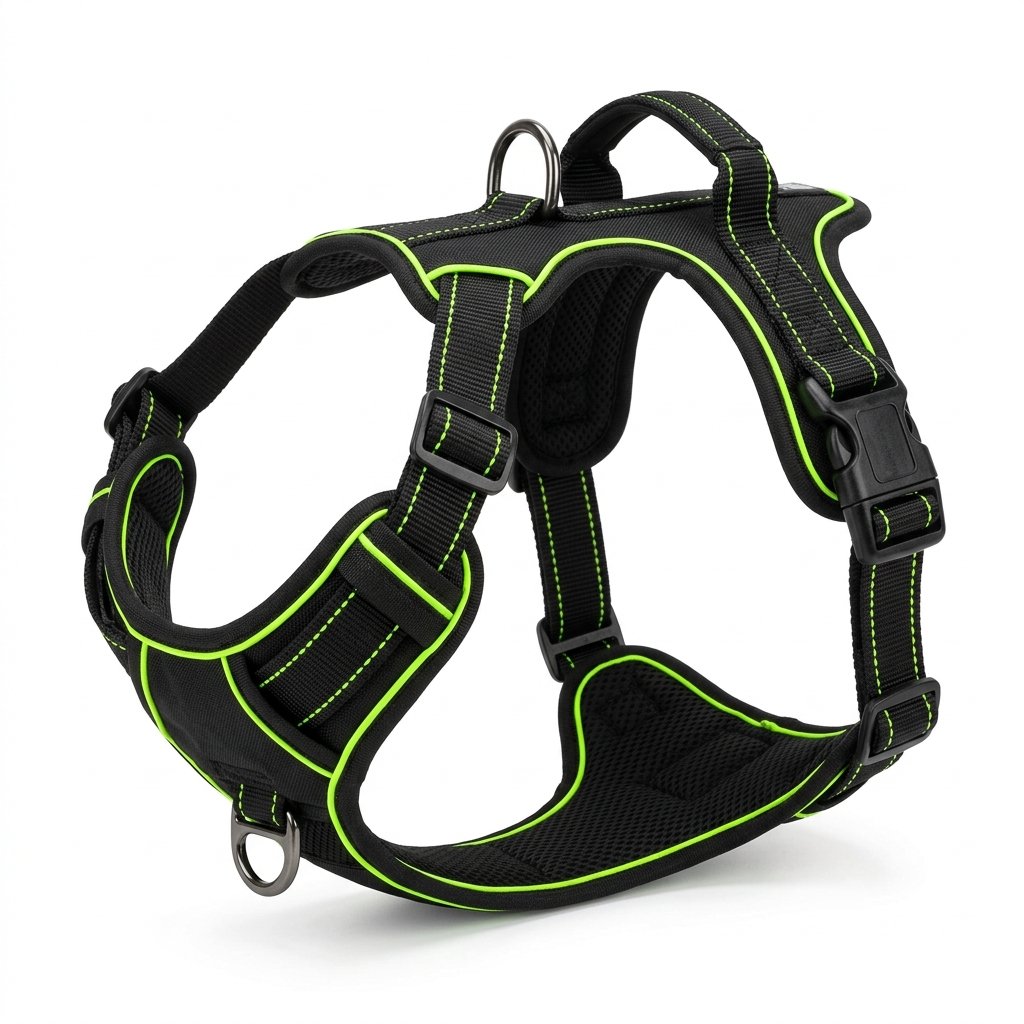
The Rabbitgoo No-Pull Harness is widely recognized in the canine training community for its straightforward, highly adaptable design. Engineered with a balanced Y-shaped front configuration, it features four independent adjustment slides—two positioned along the neck contour and two across the ribcage girth.
Design Specifications and Performance:
- Hardware Configuration: Equipped with two cast metal leash attachment rings—a front chest D-ring for active pulling deterrence, and a rear back ring for casual walks once loose-leash habits are formed.
- Materials: The outer shell utilizes durable Oxford nylon lined with breathable, cushioned air-mesh to facilitate airflow during warm-weather outings.
- Security: Two quick-release side buckles on the ribcage allow the harness to be slipped over the head and secured without requiring the dog to lift their paws.
- Visibility: High-luminescence reflective piping lines the structural borders for visibility in low-light environments.
2. Ruffwear Front Range Harness: Premium Ergonomics for Endurance
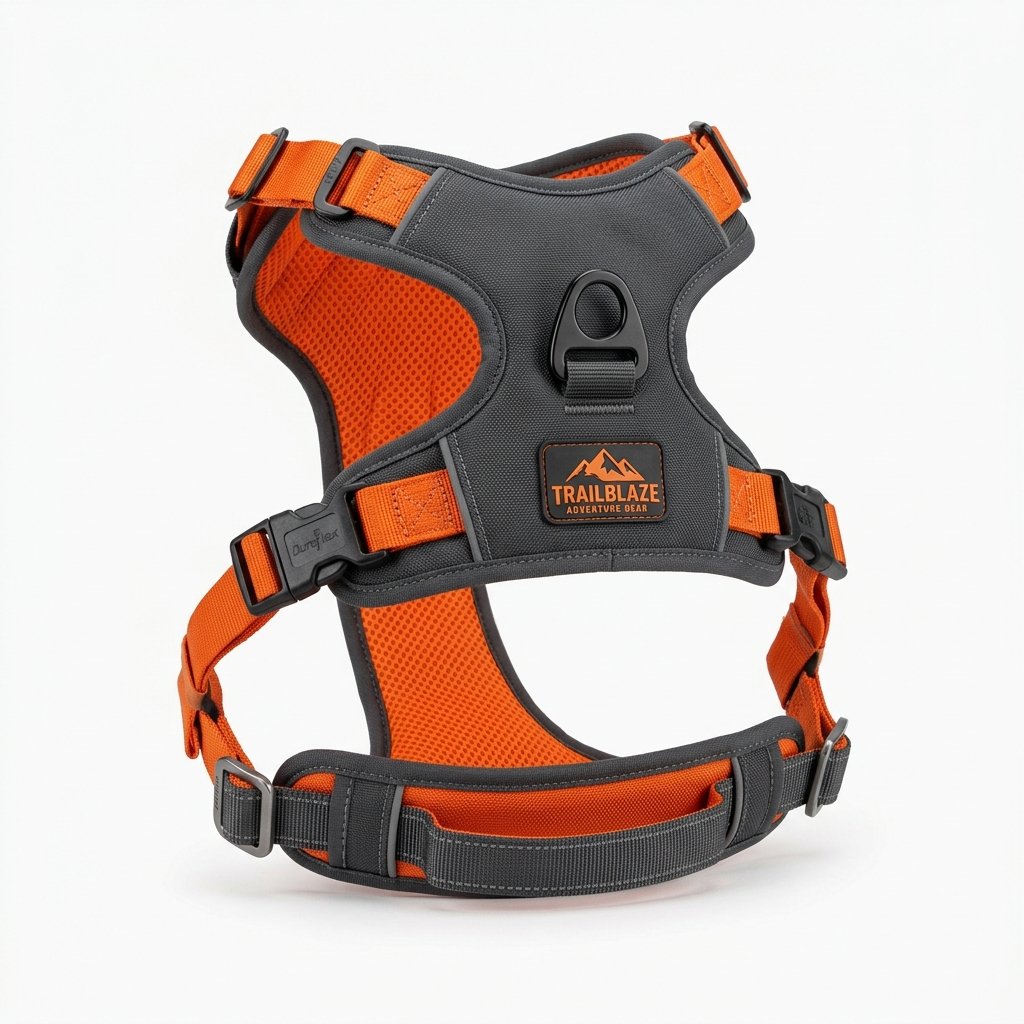
Oregon-based Ruffwear designed the Front Range Harness specifically for high-mileage trail use and active canine athletes. Its hallmark is an extended foam-padded belly and chest chassis that eliminates localized pressure points across the dog’s ribcage during sustained pulling or rapid directional changes.
Design Specifications and Performance:
- Reinforced Leash Attachments: Incorporates an engineered, high-tensile ripstop webbing loop on the front chest and an ultralight anodized aluminum V-ring on the dorsal plate.
- Chafing Mitigation: The padded chassis is contoured specifically to avoid contact with the axillary (armpit) region, allowing full scapular rotation during running strides.
- Integrated ID Storage: Features a discreet, hook-and-loop silencer pocket designed to store identification tags flat against the harness, preventing trail snags.
- Durability: Built using heavy-duty 300D polyester ripstop fabric with reinforced bartack stitching throughout critical load-bearing seams.
3. Kurgo Tru-Fit Enhanced Strength: Heavy-Duty Control and Vehicle Safety
For pet parents managing exceptionally powerful breeds such as Mastiffs, Cane Corsos, or reactive German Shepherds, standard plastic side-release buckles can raise legitimate structural concerns under sudden lunging stress. The Kurgo Tru-Fit Enhanced Strength Harness addresses this by borrowing engineering principles directly from mountaineering harnesses.
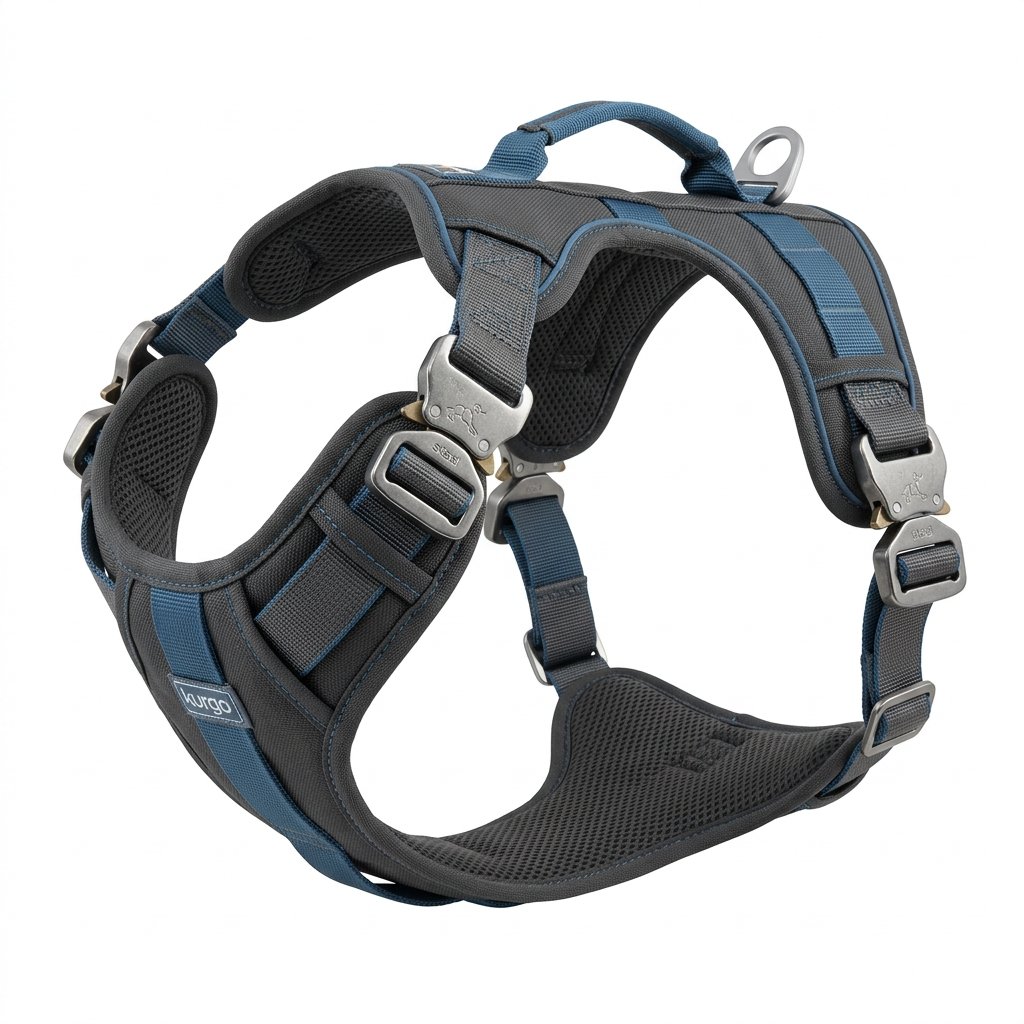
Design Specifications and Performance:
- Mountaineering Hardware: Utilizes all-metal nested steel buckles that lock under tension, eliminating plastic component failure entirely.
- Crash-Tested Standards: Rigorously impact-tested for canine automotive restraint up to 75 pounds using federal motor vehicle safety standards.
- Chest Halter Mechanics: A robust steel D-ring integrated into the center of a broad, padded sternum plate provides maximum leverage to turn determined pullers.
- Five-Point Adjustment: Enables independent calibration across the neck, ribcage, and lower sternum to accommodate deep-chested canine conformations.
4. Chai’s Choice 3M Reflective Harness: High Visibility and Direct Restraint
The Chai’s Choice 3M Outdoor Adventure Harness is designed to balance pulling redirection with tactical control and enhanced illumination for suburban environments. It features a prominent top handle mounted securely along the dorsal spine, offering handlers immediate close-quarters control.
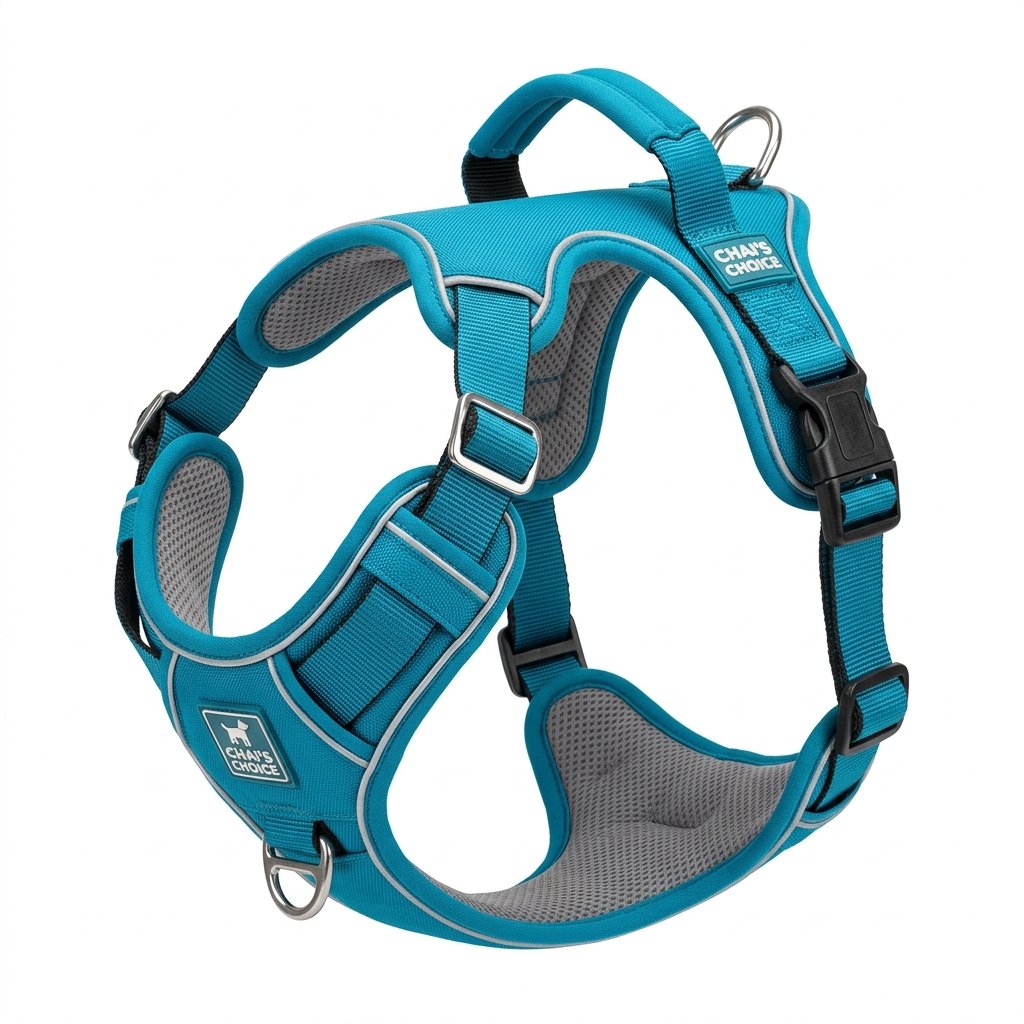
Design Specifications and Performance:
- Tactical Restraint Handle: Built with a thick, ergonomically padded handle along the back panel, enabling the handler to physically steady or guide the dog at traffic crossings.
- Illumination Technology: Genuine 3M Scotchlite reflective threading is woven throughout the exterior webbing, reflecting illumination from vehicle headlights up to 300 feet away.
- Dual Connection Points: Features a corrosion-resistant zinc alloy O-ring on the chest plate and a matched D-ring on the dorsal harness plate.
- Internal Padding: Lined with soft, breathable sponge padding that cushions the ribcage against sudden stop-and-go jerks.
5. PetSafe 3-in-1 No-Pull Harness: Gentle Martingale Guidance
While padded vest harnesses are popular, some dense-coated breeds (such as Siberian Huskies, Alaskan Malamutes, or Bernese Mountain Dogs) can overheat in full-fabric designs. The PetSafe 3-in-1 utilizes an open-frame nylon webbing system paired with a specialized front martingale loop.
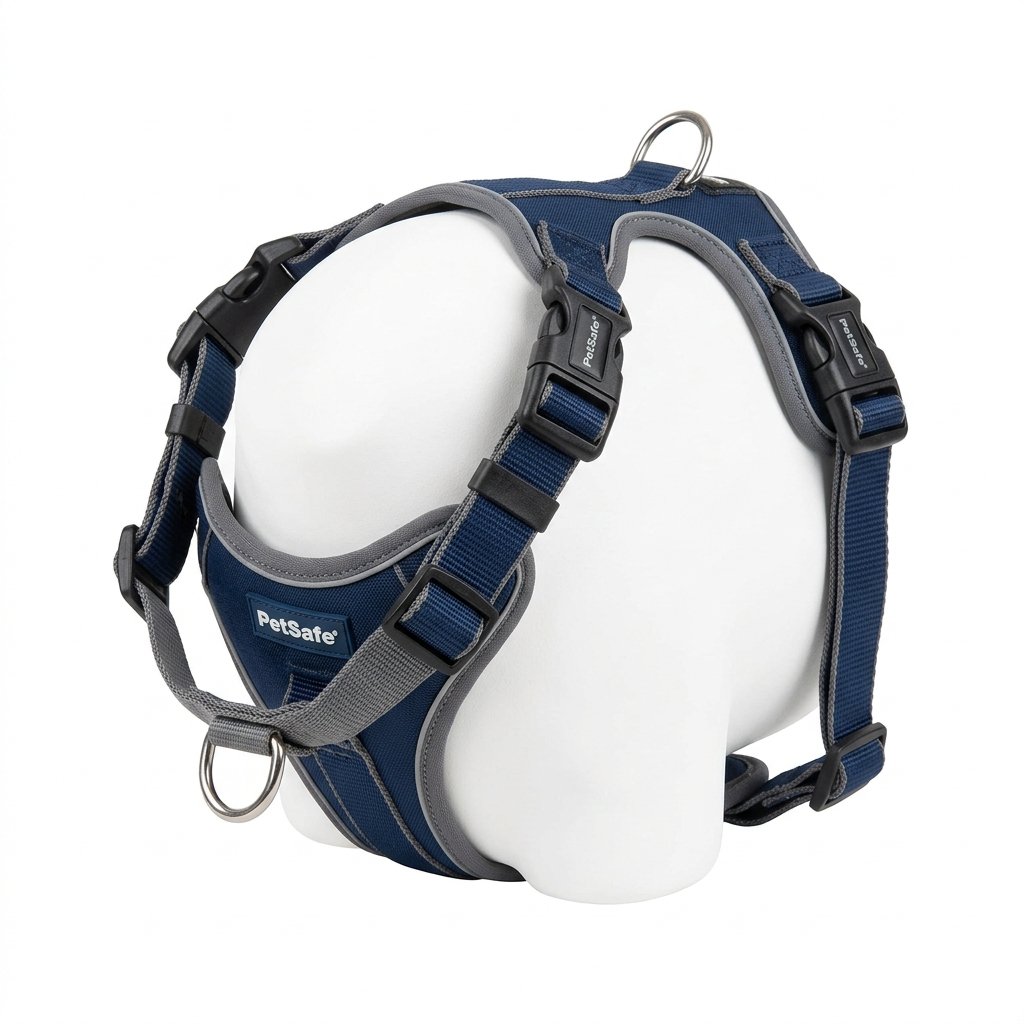
Design Specifications and Performance:
- Dynamic Martingale Action: When the dog pulls forward, the front loop tightens incrementally across the chest, delivering a subtle tactile cue that redirects their focus back toward the handler.
- Open Webbing Architecture: Minimizes heat retention across thick undercoats while ensuring maximum air circulation during warm seasons.
- Neoprene Lining: Strategic neoprene pads are installed along friction-prone strap intersections to prevent chafing on short-haired or sensitive skin.
- Color-Coded Straps: Designed with distinct contrasting strap colors on the belly band to simplify orientation and prevent tangling during application.
Orthopedic Considerations: Protecting Canine Shoulders and Spine
When selecting walking equipment for large breeds, canine orthopedics must be a top priority. A poorly designed harness can cause chronic gait alterations, joint strain, and restricted mobility.
The Y-Shape Versus Horizontal Band (Norwegian) Controversy:
Veterinary physical therapists strongly advocate for Y-shaped harnesses over horizontal-band chest straps. In a horizontal-band design, a rigid strap cuts directly across the front of the humerus and supraspinatus tendons. When the dog walks, this horizontal strap impedes forward shoulder extension, forcing the dog to alter their natural stride into a compensatory gait that places excessive load on the carpal joints and lumbar spine. In contrast, an authentic Y-shaped harness sits low against the breastbone, allowing the shoulder blades and humerus full range of uninhibited motion.
Step-by-Step Sizing Guide: The Two-Finger Rule
Never determine a large dog’s harness size relying solely on weight estimates. Body shape, chest depth, and muscularity vary wildly between breeds—an 80-pound Greyhound has a completely different ribcage geometry than an 80-pound Boxer. Follow this precise three-step measurement protocol:
- Measure the Girth: Wrap a flexible tailor’s tape around the widest circumference of your dog’s ribcage, typically situated 2 to 3 inches behind the front armpits. Ensure the tape is snug against the fur without compressing the skin.
- Measure the Lower Neck: Measure around the base of the dog’s neck, right above the shoulders where the collar normally sits. This measurement ensures the neck opening will not press against the lower trachea.
- Apply the Two-Finger Fit Rule: Once adjusted on the dog, you must be able to slide two fingers flat underneath every strap (neck, sternum, and ribcage). If you cannot fit two fingers, the straps are dangerously tight and will cause skin abrasions. If you can fit three or four fingers, the harness is too loose, and an alarmed dog can back out of the assembly.
Effective Training Protocols to Complement a No-Pull Harness
While a front-clip harness is an indispensable physical tool, lasting loose-leash walking manners require consistent positive behavioral conditioning. Combine your harness with these proven training techniques:
- The “Be a Tree” Technique: The moment your dog pulls the leash taut, stop walking immediately and stand completely still. Do not pull back or jerk the leash. Wait until your dog pauses, turns around, and puts slack back into the line. The instant the line loosens, praise calmly and resume moving forward. This teaches your dog that pulling halts all forward progress.
- High-Value Reinforcement: Keep a pouch of nutritious rewards on every walk. Every time your dog looks back at you or walks in step with a loose leash, deliver an immediate reward. For healthy reward ideas, read our guide on dog-safe training treats.
- Mental and Physical Enrichment: Large dogs often pull simply out of pent-up energy and boredom. Providing adequate mental stimulation at home before a walk dramatically reduces excitement levels. Explore our comprehensive review of indestructible dog toys for aggressive chewers to channel your dog’s energy productively.
- Avoid Retractable Leashes: Retractable tape leashes apply continuous background tension to the harness, inadvertently teaching your dog that pulling harder extends their perimeter. Always use a standard 4-to-6-foot non-elastic leash.
Frequently Asked Questions (FAQs)
1. Do no-pull dog harnesses actually stop large dogs from pulling?
Yes. Front-clip no-pull harnesses dramatically reduce forward pulling leverage from the first walk. When a dog attempts to surge forward, the chest attachment naturally turns their shoulders sideways toward the handler, eliminating their mechanical ability to lean into the pull without choking or pain.
2. Can a large dog back out of or escape from a no-pull harness?
When fitted accurately with the two-finger rule, escaping from a 4-point adjustable Y-harness during forward motion is exceptionally difficult. However, if the ribcage strap is adjusted too loosely, a panicked dog backing away can pull their elbows through the chest opening. Always verify that the girth strap sits securely behind the widest part of the ribcage.
3. Why is a front-clip harness preferred over a back-clip harness for pullers?
Back-clip harnesses trigger the opposition reflex (thigmotaxis), an instinctive muscular drive that prompts dogs to lean forward and pull harder against back pressure. A front clip bypasses this reflex completely by turning the dog’s chest and body back toward the handler whenever tension occurs.
4. Will a no-pull harness restrict my dog’s shoulder movement or cause joint issues?
Y-shaped harnesses do not restrict shoulder mobility because their straps sit low across the center breastbone, leaving the scapula and forelimb joints completely free to extend. In contrast, rigid horizontal-strap (Norwegian style) designs can compress shoulder tendons and alter natural gait, making Y-shaped designs the superior orthopedic choice.
5. How do I determine if my dog’s harness is adjusted too tightly?
Use the two-finger rule across every strap: you should be able to slide two fingers flat between your dog’s coat and the harness webbing. If you experience resistance or cannot slide two fingers through, loosen the strap slightly to prevent friction burns and hair matting.