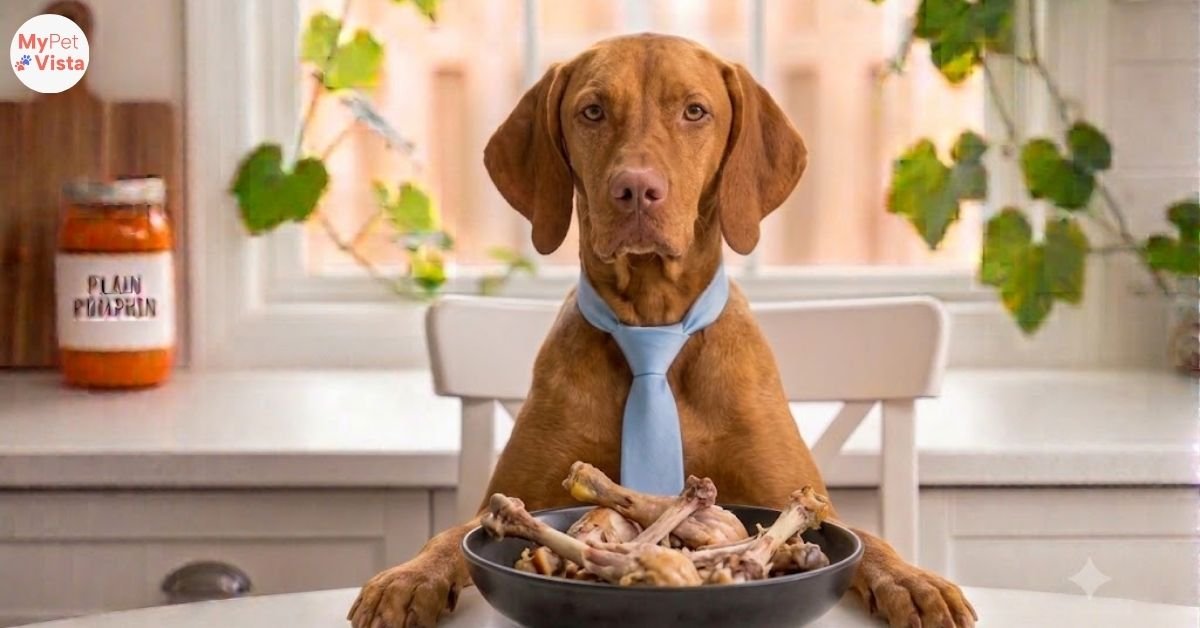
If your dog has ever grabbed a chicken bone from the dinner table, you probably know how quickly they can swallow it. That can leave any pet parent wondering: can dogs eat chicken bones, or are they dangerous?
The short answer is no – chicken bones should not be intentionally given to dogs. In particular, cooked chicken bones can become brittle and splinter, creating serious risks such as choking, mouth injuries, intestinal blockage, or damage to the digestive tract.
Even raw chicken bones aren’t completely risk-free. They can carry harmful bacteria and may still cause choking, dental injuries, or gastrointestinal obstruction.
So if your dog is staring at your chicken dinner with those irresistible eyes, it’s much safer to give them boneless, plain, fully cooked chicken instead.
Let’s look at exactly why chicken bones are dangerous, what happens if a dog swallows one, and what you should do if it happens.
Why Are Chicken Bones Dangerous for Dogs?
Chicken bones are relatively small and can break into sharp pieces.
The biggest concern is that a dog may chew or swallow a fragment that becomes lodged somewhere in the digestive tract.
Potential complications include:
- Choking
- Broken teeth
- Cuts inside the mouth
- Injury to the throat or esophagus
- Intestinal blockage
- Perforation of the digestive tract
- Vomiting or abdominal pain
The risk can be particularly concerning with cooked chicken bones because cooking changes their structure and can make them more brittle.
Can Dogs Eat Cooked Chicken Bones?
No. Cooked chicken bones should never be intentionally fed to dogs.
When chicken bones are cooked, they can become brittle and break into sharp fragments.
A dog may crunch the bone into pieces and swallow them before you have a chance to take them away.
These fragments can potentially:
- Become lodged in the throat
- Cause choking
- Scratch or puncture the digestive tract
- Become stuck in the intestines
- Cause an obstruction
This is why leftover chicken bones from roasted, fried, baked, or grilled chicken should go directly into a secure trash container – not your dog’s food bowl.
What About Raw Chicken Bones?
Raw chicken bones are sometimes included in raw-feeding diets, but that doesn’t mean they’re automatically safe.
Raw bones may be less brittle than cooked bones, but they can still cause:
- Choking
- Broken teeth
- Digestive obstruction
- Gastrointestinal injuries
Raw chicken also carries bacterial risks.
If you’re considering a raw diet or raw bones for your dog, discuss the plan with your veterinarian or a qualified veterinary nutrition professional first.
You can also read Can Dogs Eat Raw Chicken? to learn more about the potential benefits and risks of raw chicken.
What Happens If a Dog Eats a Chicken Bone?
Not every dog that swallows a chicken bone will develop complications, but there is no reliable way to know at home whether the bone will pass safely.
The outcome can depend on:
- Size of the dog
- Size and shape of the bone
- Whether the bone was cooked
- How much was swallowed
- Where the bone becomes lodged
- Your dog’s individual health
Some dogs may show no immediate symptoms.
Others may develop problems such as vomiting, gagging, abdominal pain, difficulty passing stool, or lethargy.
That’s why it’s important to take the situation seriously.
My Dog Ate a Chicken Bone – What Should I Do?
If your dog has swallowed a chicken bone, contact your veterinarian for advice as soon as possible.
Try to determine:
- Was the bone cooked or raw?
- How large is your dog?
- Approximately how much bone was swallowed?
- When did it happen?
- Is your dog showing any symptoms?
This information can help your veterinarian determine what to do next.
Don’t Make Your Dog Vomit Unless Instructed
Do not try to make your dog vomit unless a veterinarian specifically tells you to.
A sharp bone fragment could potentially cause additional injury while being brought back up.
Avoid home remedies or forcing your dog to swallow large amounts of bread, rice, or other food in an attempt to “push the bone through.”
Veterinary guidance is the safest approach.
Signs of a Possible Problem
After a dog swallows a chicken bone, watch carefully for symptoms such as:
- Repeated vomiting
- Gagging or coughing
- Difficulty swallowing
- Excessive drooling
- Refusing food
- Abdominal pain
- Bloated abdomen
- Lethargy
- Constipation
- Straining to defecate
- Blood in vomit or stool
- Difficulty breathing
Some of these signs can indicate an obstruction or injury and require prompt veterinary attention.
Difficulty Breathing Is an Emergency
If your dog is choking or struggling to breathe, seek emergency veterinary care immediately.
Don’t wait to see whether the problem resolves on its own.
Are Chicken Bones More Dangerous for Small Dogs?
They can be.
Small dogs have smaller airways and digestive tracts, so a bone that might be relatively small to a large dog can represent a significant choking or obstruction risk for a small breed.
But that doesn’t mean large dogs can safely eat chicken bones.
Dogs of all sizes can be injured by bones.
Can Chicken Bones Break a Dog’s Teeth?
Yes.
Hard bones can damage teeth, especially when a dog aggressively chews them.
A fractured tooth can be painful and may require veterinary treatment.
This is another reason why giving chicken bones as a chew isn’t worth the risk.
Can Puppies Eat Chicken Bones?
No.
Puppies should not be given chicken bones.
Their bodies are still developing, and puppies may also be more likely to chew and swallow things quickly.
If you want to give a puppy chicken, use plain, boneless, fully cooked chicken cut into appropriately sized pieces.
Can Dogs Eat Plain Cooked Chicken Instead?
Absolutely!
Plain, fully cooked, boneless chicken can be a much safer treat than chicken bones.
Before giving it to your dog:
Remove all bones
Remove excessive skin and fat
Cook it thoroughly
Don’t add garlic or onion
Avoid excessive salt
Skip spicy seasonings
Cut it into appropriate pieces
Chicken can be used as an occasional treat or mixed with your dog’s normal food.
If you’re interested in another protein option, Can Dogs Eat Turkey? explains how turkey can be prepared safely for dogs.
What About Chicken Wings?
Chicken wings contain small bones that can be particularly easy for dogs to swallow.
Never give cooked chicken wings with the bones attached.
If you want to share chicken wing meat, remove the bones completely and give only a small amount of plain, cooked meat.
Be especially careful with leftover restaurant or takeout chicken wings because they may also contain spicy sauces, garlic, onion, excessive salt, and fat.
What About Chicken Drumsticks?
The same rule applies.
A cooked chicken drumstick contains a bone that can splinter when chewed.
Don’t give your dog the entire drumstick.
If you want to share the meat, remove the bone completely and offer a small amount of plain meat.
Are Any Bones Safe for Dogs?
This is a complicated area because “bone” doesn’t automatically mean safe or unsafe.
Some commercially produced dog chews are specifically designed for dogs and have safety considerations that ordinary food bones don’t.
However, cooked chicken bones are not a safe chew.
If you want your dog to chew, choose an appropriate dog chew based on their size and chewing habits, and supervise them.
How to Keep Chicken Bones Away From Dogs
Prevention is much easier than dealing with a swallowed bone.
Try these simple habits:
1. Secure your trash
Chicken bones smell incredibly appealing to dogs.
Use a trash can with a secure lid.
2. Don’t leave plates unattended
A curious dog can grab a chicken bone in seconds.
3. Teach family members
Make sure children and guests know not to give dogs chicken bones.
4. Keep food preparation areas clean
Pick up dropped bones immediately.
5. Avoid giving “just one”
Dogs don’t understand that a bone is dangerous.
It’s safer never to establish the habit.
What Other Chicken Foods Should Dogs Avoid?
Chicken itself can be perfectly suitable when properly prepared, but chicken dishes aren’t always dog-friendly.
Avoid chicken prepared with:
- Garlic
- Onion
- Chili
- Excessive salt
- Lots of butter
- Rich sauces
- Cooked bones
A plain piece of chicken is very different from heavily seasoned fried or roasted chicken.
Final Verdict: Can Dogs Eat Chicken Bones?
So, can dogs eat chicken bones?
No. Chicken bones should not be intentionally given to dogs, and cooked chicken bones are particularly dangerous because they can become brittle and splinter.
Even raw chicken bones aren’t completely risk-free.
Remember:
Never intentionally feed cooked chicken bones
Don’t give chicken wings or drumsticks with bones
Don’t allow dogs to dig through chicken-bone trash
Don’t induce vomiting unless instructed by a veterinarian
Contact your veterinarian if your dog swallows a bone
Seek emergency care if your dog is choking or having trouble breathing
Choose plain, fully cooked, boneless chicken instead
A few seconds of prevention can save your dog from a painful and potentially serious emergency. When it comes to chicken bones, it’s simply not worth the risk.
FAQs About Dogs and Chicken Bones
Keep Learning With MyPetVista
Want to learn more about safe foods, dog nutrition, and everyday pet care? Visit MyPetVista for practical guides that help you keep your furry family member happy and healthy.