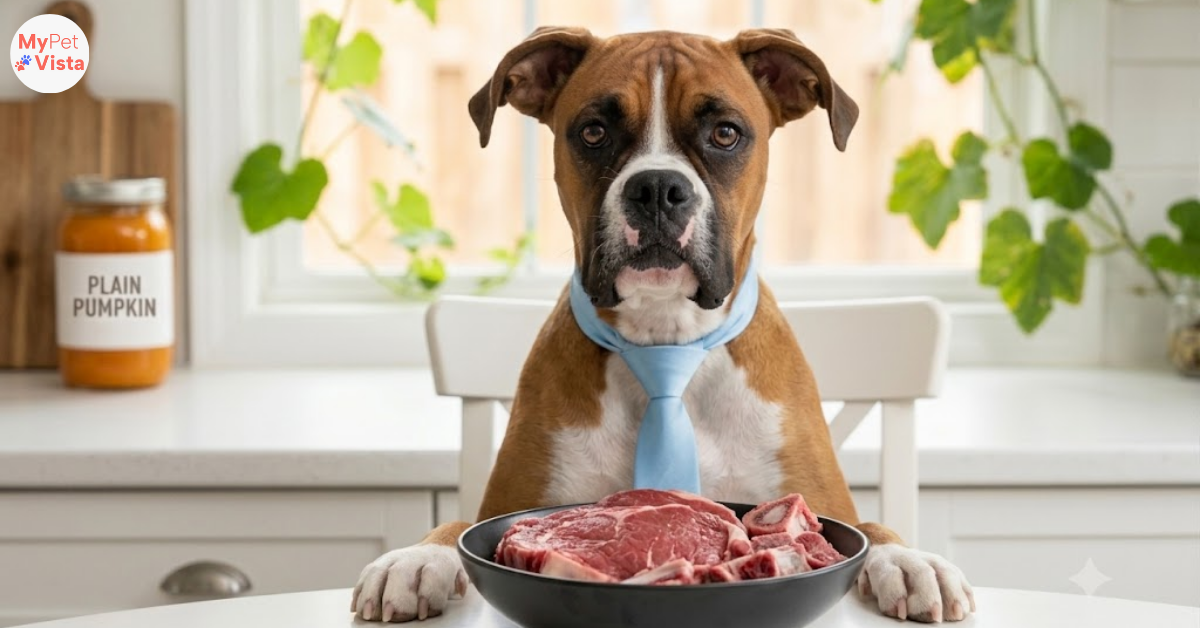
If your dog sees you handling fresh chicken, beef, or another piece of meat, you may notice those excited eyes immediately. But before giving your pup a piece straight from the package, you may wonder: can dogs eat raw meat safely?
The answer isn’t as simple as yes or no.
Dogs can digest meat, but raw meat can carry harmful bacteria and parasites that may make dogs sick and can also create health risks for people in the household. The CDC does not recommend feeding raw pet food to dogs and cats because raw animal proteins can contain germs such as Salmonella and Listeria.
That doesn’t mean every dog that eats raw meat will become sick. Some dogs may appear completely normal after eating it. However, the absence of symptoms doesn’t eliminate the risk.
So, should you feed your dog raw meat? Let’s look at the benefits, risks, different types of raw meat, and safer alternatives.
Is Raw Meat Safe for Dogs?
Raw meat is generally not the safest choice for dogs.
Dogs evolved from carnivorous ancestors, but modern pet dogs are not simply small versions of wild wolves. They can digest a variety of foods, and they don’t need raw meat to receive adequate protein or nutrition.
The CDC specifically advises against feeding raw pet food, while the FDA warns that raw pet food has a greater likelihood of contamination with disease-causing bacteria than other types of pet food.
Raw meat can potentially contain:
- Salmonella
- Listeria monocytogenes
- Certain strains of E. coli
- Parasites
- Other disease-causing microorganisms
The risk doesn’t disappear simply because the meat looks fresh or has been refrigerated.
Why Is Raw Meat Risky for Dogs?
1. Salmonella
Salmonella is one of the biggest concerns associated with raw animal products.
A dog may develop symptoms such as:
- Vomiting
- Diarrhea
- Fever
- Loss of appetite
- Lethargy
- Abdominal discomfort
Even more importantly, some infected dogs may not look sick but can still shed bacteria in their feces and saliva. This creates a potential route of exposure for people and other animals in the household.
2. Listeria
Raw foods can also contain Listeria monocytogenes.
Dogs may experience gastrointestinal symptoms, although serious illness is less common. Even apparently healthy pets can potentially carry and shed the bacteria after exposure.
This is particularly important in households with young children, older adults, pregnant people, or individuals with weakened immune systems.
3. Parasites
Some raw meats can contain parasites or parasite larvae. The specific risk depends on the animal, source, handling, and preparation.
Cooking meat thoroughly is one of the most effective ways to reduce many foodborne risks.
Can Dogs Eat Raw Chicken?
Raw chicken is one of the meats that frequently appears in homemade raw diets.
However, raw chicken can carry bacteria such as Salmonella and other pathogens, so it isn’t considered a risk-free food for dogs.
If you want to understand the specific concerns surrounding raw poultry, our guide Can Dogs Eat Raw Chicken? goes into more detail about the potential benefits, risks, and feeding considerations.
For most pet parents, plain fully cooked chicken without bones, seasoning, or sauces is a safer option.
Can Dogs Eat Raw Beef?
Raw beef isn’t automatically safe simply because it is beef.
Ground beef can be particularly concerning because grinding can distribute bacteria throughout the meat.
Raw beef may contain pathogens such as Salmonella and E. coli. Freezing also shouldn’t be viewed as a guaranteed way to make raw meat safe; freezing does not reliably eliminate all harmful bacteria.
If you want to give your dog beef, thoroughly cooked, plain beef is generally a safer choice.
Can Dogs Eat Raw Pork?
Raw pork deserves extra caution because certain parasites and pathogens can be associated with uncooked pork.
If you’re considering pork for your dog, cooking it thoroughly is the safer approach.
You can learn more about pork preparation and portion considerations in Can Dogs Eat Pork?.
Remember that processed pork products such as bacon and ham have a different problem: they’re usually high in sodium and fat.
What About Raw Fish?
Raw fish can also carry parasites and bacteria.
Some types of raw fish can present additional risks depending on where the fish comes from and how it was handled.
If you’re looking for a fish-based protein, properly cooked salmon can be a safer option. Our guide Can Dogs Eat Salmon? explains how to prepare salmon safely and why raw salmon should be avoided.
What About Raw Meat With Bones?
This is another important issue.
Some raw-feeding diets include bones, but giving your dog bones can introduce risks such as:
- Choking
- Broken teeth
- Mouth injuries
- Gastrointestinal obstruction
- Digestive tract injury
Cooked bones are particularly dangerous because they can become brittle and splinter.
For everyday chewing, veterinarian-approved dental chews or appropriate chew toys are generally safer alternatives.
Are There Any Benefits to Raw Meat?
Raw-feeding advocates sometimes claim that raw meat can provide benefits such as:
- High-quality protein
- Natural fats
- Amino acids
- Less processing
- Improved coat condition
- Better stool quality
However, raw does not automatically mean healthier.
The CDC notes that both raw and cooked pet foods can be made with high- or low-quality ingredients, and both can be nutritionally balanced or inadequate.
The real nutritional question is whether your dog’s entire diet provides the correct amounts of protein, fat, vitamins, minerals, and calories.
If you’re considering a homemade or raw diet, it is much safer to develop the diet with a veterinarian or qualified veterinary nutrition professional rather than simply feeding raw meat.
What About Raw Eggs With Raw Meat?
Some raw diets also include uncooked eggs.
Raw eggs introduce additional food-safety concerns, including bacterial contamination.
If you’re considering adding eggs to your dog’s diet, our guide Can Dogs Eat Raw Eggs? explains the potential benefits and risks in more detail.
For many dogs, cooked eggs served plain are a simpler alternative.
What Is the Safest Way to Give Meat to a Dog?
If you want to give your dog meat, cooking it thoroughly is generally the safer approach.
Choose lean meat
Chicken, turkey, lean beef, or properly prepared fish can be suitable options depending on your dog’s individual diet.
Cook it thoroughly
Cooking helps kill many harmful bacteria and parasites.
Keep it plain
Avoid:
- Garlic
- Onion
- Excess salt
- Spicy seasonings
- Rich sauces
- Butter-heavy preparations
Remove bones
Don’t give your dog cooked bones.
Cut it into appropriate pieces
Small pieces can reduce choking risk, particularly for dogs that tend to swallow food quickly.
Keep portions moderate
Meat treats should complement, not replace, a complete and balanced dog food unless a veterinarian has specifically formulated the diet.
Raw Meat Can Also Affect Your Household
One of the most overlooked problems with raw meat is that the risk isn’t limited to the dog.
Raw meat can contaminate:
- Kitchen counters
- Cutting boards
- Food bowls
- Floors
- Hands
- Utensils
And if a dog becomes a carrier of bacteria, those organisms can potentially spread through saliva or feces.
The FDA recommends careful handwashing and sanitation when handling pet food and emphasizes that avoiding raw diets is the most effective way to reduce exposure to these foodborne bacteria.
This is especially important if children or vulnerable family members live in the home.
What If My Dog Accidentally Ate Raw Meat?
Don’t automatically panic. A single accidental bite doesn’t necessarily mean your dog will become sick.
However, monitor your dog closely.
Watch for:
- Vomiting
- Diarrhea
- Bloody stool
- Fever
- Weakness
- Loss of appetite
- Unusual lethargy
- Abdominal discomfort
If your dog ate a large quantity of raw meat, consumed raw meat with bones, ate meat that may have been spoiled, or develops concerning symptoms, contact your veterinarian.
Also consider what type of meat your dog ate and whether it contained bones, seasoning, or other potentially harmful ingredients.
Are Puppies and Senior Dogs at Greater Risk?
Extra caution is appropriate with puppies, older dogs, and dogs with weakened immune systems or underlying medical conditions.
Their ability to handle infections or digestive disturbances may differ from that of a healthy adult dog.
For these dogs, it’s particularly important to discuss significant dietary changes with a veterinarian before introducing raw food.
What Can Dogs Eat Instead of Raw Meat?
If your goal is to give your dog nutritious whole foods, you have plenty of safer options.
Plain cooked meat can provide high-quality protein without the same raw-food bacterial risk.
You can also consider appropriately prepared foods such as:
- Carrots
- Sweet potatoes
- Green beans
- Plain corn kernels
- Cooked eggs
- Fully cooked fish
The important thing is that these foods remain appropriate for your dog’s overall diet.
When Should You Call the Vet?
Contact your veterinarian if your dog develops significant symptoms after eating raw meat, particularly:
- Repeated vomiting
- Severe or persistent diarrhea
- Blood in vomit or stool
- Extreme weakness
- Fever
- Abdominal pain
- Refusal to eat or drink
- Signs of dehydration
- Difficulty breathing
- Collapse
Don’t wait for symptoms to become severe if you know your dog consumed a potentially hazardous amount of raw food or bones.
Final Verdict: Can Dogs Eat Raw Meat?
So, can dogs eat raw meat?
Technically, dogs can consume raw meat, and some dogs may eat it without immediately becoming ill. But that doesn’t make raw meat a risk-free or recommended choice.
The safer option for most household dogs is properly cooked, plain meat.
The CDC does not recommend feeding raw pet food because of the risk of harmful bacteria, while the FDA highlights the potential health risks to both pets and people.
If you want to include meat in your dog’s diet, focus on:
Thoroughly cooked meat
Lean cuts
No garlic or onion
No heavy seasoning
No cooked bones
Appropriate portions
A complete and balanced primary diet
Raw feeding is a significant dietary decision, not something that should be started simply because a dog enjoys raw meat.
When it comes to your pup’s health, safe and balanced beats trendy every time.
FAQs About Dogs Eating Raw Meat
Keep Learning With MyPetVista
Want to learn more about dog nutrition, safe foods, and everyday pet care? Visit MyPetVista for more helpful guides for you and your furry family member.