
Choosing the right food for your cat is not always easy. With so many brands available, many cat owners wonder: Is Purina good for cats, or should they choose another option?
Purina is one of the most recognized pet food brands and offers everything from affordable everyday cat food to specialized formulas designed for specific needs. However, the quality of cat food depends on the exact formula you choose, not only the brand name.
In this review, we will look at Purina cat food ingredients, nutrition, popular product lines, benefits, limitations, and which cats may benefit from different Purina options.
Quick Answer: Is Purina Good for Cats?
Yes, Purina can be a good choice for many cats. The brand offers complete and balanced cat food formulas designed for different life stages and dietary needs. However, some Purina products are better suited for specific cats than others. Right choice depends on factors like your cat’s age, health, activity level, and food preferences.
What Makes Purina a Popular Cat Food Brand?
Purina has been producing pet food for many years and has become a common choice among cat owners because of its wide range of products. Unlike brands that focus on only one type of diet, Purina offers different options for:
- Kittens
- Adult cats
- Senior cats
- Indoor cats
- Cats with sensitive stomachs
- Weight management needs
- Wet food preferences
This variety allows owners to choose a formula based on their cat’s individual requirements.
How We Evaluated Purina Cat Food
A good cat food review should look beyond brand popularity. We considered several important factors:
- Ingredient quality
- Protein sources
- Nutritional balance
- Product variety
- Suitability for different cats
- Value for money
A food that works well for one cat may not be the right choice for another, so understanding these factors is important before buying.
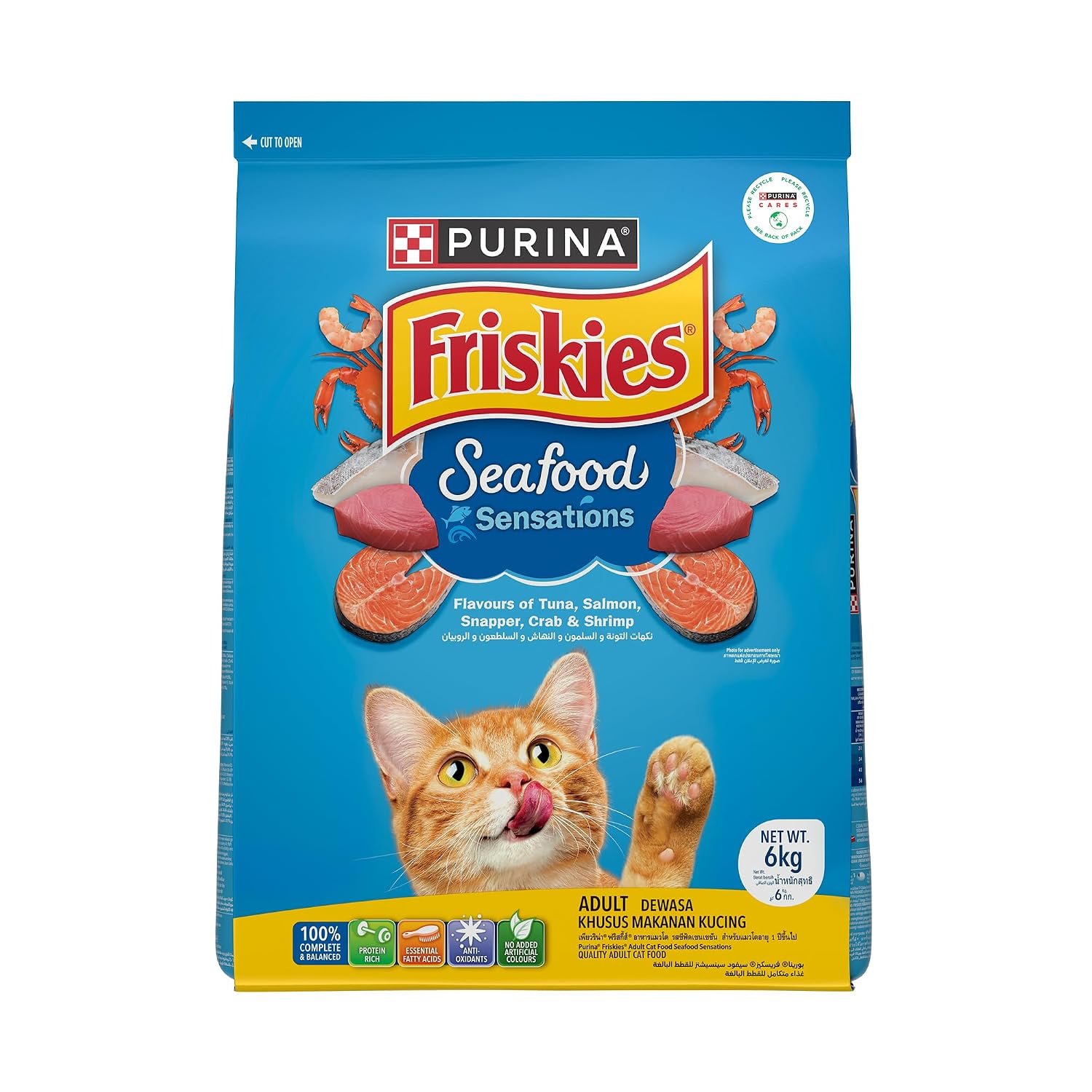
Purina Friskies Seafood Sensations Adult Dry Cat Food, 6kg
A World of Flavours in Every Bowl – An irresistible blend of Tuna Salmon, Snapper, Crab & Shrimp flavour to delight your cat100% Complete & Balanced Nutrition: Provides essential nutrients to support overall health and well-being
Purina Cat Food Ingredients Review
Ingredients are one of the most important parts of choosing cat food. Cats need nutrients like animal protein, essential amino acids, fats, vitamins, and minerals to maintain good health.
Purina offers different formulas, so ingredients can vary between products. Some formulas focus more on protein, while others are designed for affordability or specific health needs.
Common Ingredients Found in Purina Cat Food
| Ingredient Type | Purpose | What Cat Owners Should Know |
|---|---|---|
| Animal protein | Supports muscle maintenance | Cats require protein as an important part of their diet |
| Vitamins and minerals | Supports overall nutrition | Needed for a balanced meal |
| Fat sources | Provides energy | Helps support skin and coat health |
| Carbohydrates | Provide energy and texture | Amount varies between formulas |
| Added nutrients | Support specific needs | Some formulas include targeted nutrition |
The important thing is not to judge the entire brand based on one ingredient. Instead, look at the complete formula and whether it matches your cat’s needs.
Read More: Blood in Cat Stool: Causes, Concerns & What Every Cat Parent Should Know
Purina Cat Food Product Comparison
Purina has several product lines, and each one is designed for different types of cat owners.
Before choosing one, consider your cat’s age, health requirements, and budget.
| Product | Best For | Main Benefit | Price Level |
|---|---|---|---|
| Purina Pro Plan | Cats needing specialized nutrition | Advanced formulas for different health needs | Higher |
| Purina ONE | Everyday nutrition | Balance between quality and affordability | Medium |
| Purina Cat Chow | Budget-friendly feeding | Affordable daily option | Lower |
| Fancy Feast | Cats that prefer wet food | Variety of flavors and textures | Medium |
Which Purina Product Is the Best Choice?
There is no single Purina product that works best for every cat.
- Purina Pro Plan may be a better choice for owners looking for targeted nutrition.
- Purina ONE can be a practical option for everyday feeding.
- Purina Cat Chow may suit owners who need a more affordable choice.
- Fancy Feast is popular among cats that enjoy wet food.
Purina Cat Food Pros and Cons
Before buying any cat food, it helps to look at both the advantages and limitations.
| Pros | Cons |
|---|---|
| Wide range of formulas for different cats | Quality varies between different products |
| Available in wet and dry food options | Some formulas may not suit cats with sensitivities |
| Affordable options for different budgets | Some owners prefer limited-ingredient diets |
| Easy to find online and in stores | Not every formula is designed for medical conditions |
| Offers options for kittens, adults, and senior cats | Choosing the right formula requires checking ingredients |
Overall, Purina’s biggest advantage is the variety it offers. However, cat owners should compare individual products instead of judging the entire brand as one product.
Is Purina Good for Kittens?
Yes, Purina offers kitten-specific formulas designed to support growth and development.
Kittens have different nutritional needs compared with adult cats. They require appropriate levels of protein, calories, and nutrients to support their growing bodies.
If you are buying Purina for a kitten, choose a product specifically labeled for kittens rather than using adult cat food.
Do Veterinarians Recommend Purina?
Many veterinarians consider Purina a reliable option because the company produces a wide range of nutritionally balanced formulas.
However, veterinarians usually consider the individual cat rather than recommending one brand for every situation.
Cats with:
- Allergies
- Digestive problems
- Kidney issues
- Other health conditions
may require a more specific diet based on veterinary advice.
Who Should Choose Purina Cat Food?
Purina may be a suitable option for:
| Good Choice For | Why |
|---|---|
| Cat owners who want affordable options | Different price ranges are available |
| Owners who prefer easy availability | Products are widely sold |
| Cats needing different formulas | Many options are available |
| Owners trying different food types | Wet and dry options exist |
Who May Want Another Option?
Some cats may need a different approach.
| Consider Another Option If | Reason |
|---|---|
| Your cat has a medical condition | A specialized diet may be needed |
| Your cat has ingredient sensitivities | Specific ingredients may need to be avoided |
| You prefer limited-ingredient food | Other brands may offer more options |
Purina vs Other Cat Food Brands
Many cat owners compare Purina with other popular brands before making a decision.
| Brand | Best Known For |
|---|---|
| Purina | Variety and accessibility |
| Hill’s Science Diet | Veterinary-focused nutrition |
| Royal Canin | Specific health and breed formulas |
| Blue Buffalo | Different ingredient approach |
The best choice depends on your cat’s needs rather than the brand’s reputation alone.
Final Verdict: Is Purina Good for Cats?
Purina can be a good choice for many cats because it provides a wide selection of formulas at different price points. The brand offers options for kittens, adult cats, senior cats, and cats with specific dietary requirements.
However, choosing the right formula matters more than simply choosing the brand. A product that works well for one cat may not be the best option for another.
FAQs
Is Purina safe for cats?
Yes, many Purina formulas are designed to provide complete nutrition for cats. The right product depends on your cat’s individual needs.
Is Purina ONE better than regular Purina?
Purina ONE is often chosen by owners looking for a balance between affordability and nutrition.
Is Purina Pro Plan worth the price?
Purina Pro Plan may be worth considering for cats that need more specialized nutrition options.
What is the healthiest Purina cat food?
The healthiest option depends on your cat’s specific requirements, age, and health condition.
Can kittens eat Purina cat food?
Yes, but kittens should eat formulas specifically made for kittens because their nutritional needs differ from adult cats.

[…] how to maintain optimal feline health and balanced nutrition by reading our guides on is Purina good for cats and why cats knock things […]