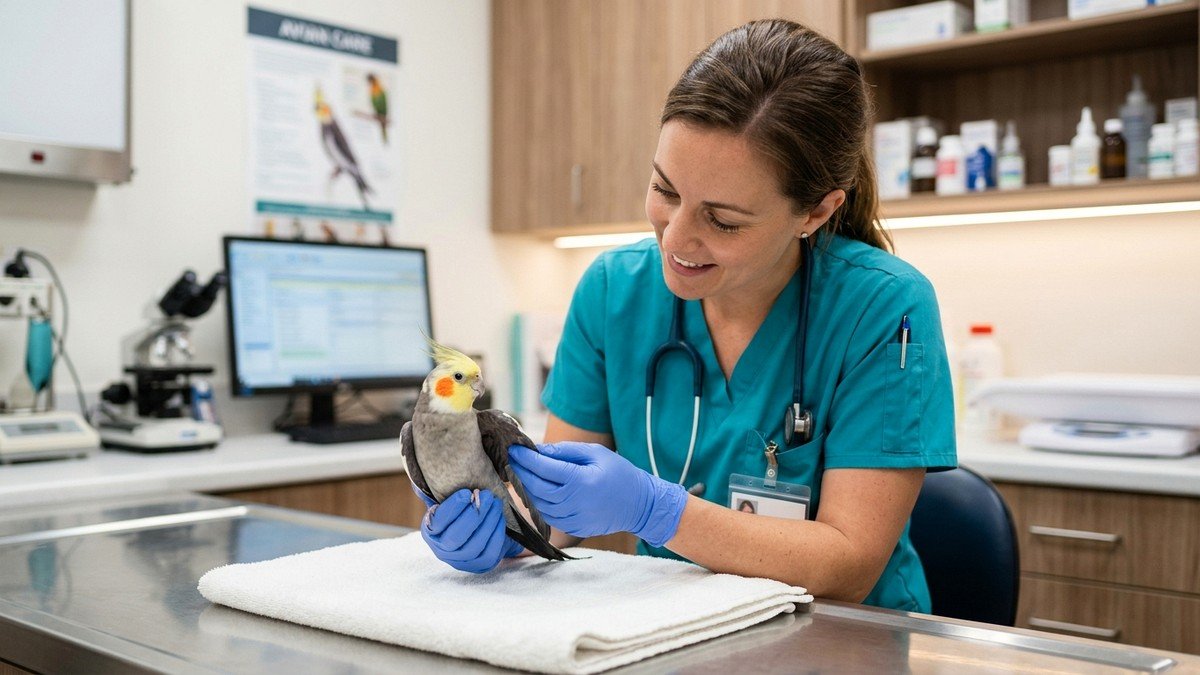
In avian medicine, time is the single most critical factor determining life or death. Unlike dogs and cats that openly display discomfort through whimpering or lethargy, pet birds are wild prey species programmed by millennia of evolution to conceal any sign of weakness. By the time a bird appears visibly sick to an untrained eye, its physiological reserves are often near total exhaustion.
Critical Veterinary Rule
The avian masking instinct makes subtle behavioral changes true clinical emergencies. A bird sitting puffed on the bottom of its cage is in an advanced state of decompensation requiring immediate veterinary intervention.
1. Understanding the Avian Masking Instinct
In natural ecosystems, predators focus specifically on the slowest, weakest members of a flock. Furthermore, healthy wild parrots will often harass or drive out a sick individual to protect the collective flock from contagion and predator attraction. Because of this intense selective pressure, companion birds maintain an immaculate facade of health even when suffering from severe systemic infections.
When you approach the cage, an ill bird may suddenly sit upright, chirp cheerfully, and peck at seeds. However, the moment you leave the room, the bird drops back into a fluffed, exhausted posture. Diligent daily observation from across the room is essential for catching illnesses early.
2. Postural and Feather Symptoms
A healthy bird maintains tight, sleek plumage, bright eyes, and alert posture. When illness strikes, physical presentation deteriorates quickly:
- Chronic Fluffed Feathers: Birds fluff their plumage to trap a layer of warm air against their skin. When a sick bird cannot maintain its normal internal body temperature (104 to 108 degrees Fahrenheit), it sits continuously fluffed with both feet flat on the perch.
- Sitting on the Cage Bottom: Perching requires muscular tone. A bird that abandons its high perches to sit on the cage floor or huddle near the food dish is severely weakened and lacking the strength to balance.
- Drooping or Trembling Wings: Wings held lower than normal or trembling constantly indicate extreme physical exhaustion or systemic neuromuscular failure.
3. Respiratory Distress (Tail Bobbing and Clicking)
The avian respiratory system is extraordinarily complex, consisting of rigid lungs and nine pneumatic air sacs throughout the body cavity. Because birds lack a diaphragm, they must physically expand their ribcage and abdomen to move air.
When respiratory infections (such as aspergillosis, mycoplasma, or chlamydiosis) inflame the airways, breathing becomes labored. You will observe rhythmic up-and-down tail bobbing with each breath, open-mouth panting, and distinct clicking or wheezing sounds. This is a medical emergency requiring immediate supplemental oxygen.
4. Dropping Changes and Weight Loss
Cage liner inspections provide a daily window into avian internal health. Monitor for these warning signs:
- Polyuria vs Diarrhea: True diarrhea is unformed liquid feces. Polyuria is an excess of clear urine surrounding formed feces, often signaling kidney dysfunction, diabetes, or heavy metal poisoning.
- Discolored Urates: Healthy urates are chalky white. Bright yellow or lime-green urates indicate acute liver failure (chlamydiosis or psittacosis).
- Undigested Seed in Stool: Whole seeds passing in the droppings indicate proventricular dilatation disease (PDD) or severe fungal enteritis.
- Keel Bone Prominence: Run your finger down the center of your bird’s chest. If the sharp ridge of the breastbone feels knife-like with sunken pectoral muscles on either side, the bird is starving despite appearing full due to puffed feathers.
Critical Avian Health Warning Checklist
Review this clinical triage table to assess the urgency of your bird’s symptoms:
| Clinical Sign | Severity Rating | Suspected Condition | Immediate Response |
|---|---|---|---|
| Tail Bobbing with Breathing | Critical Emergency | Severe respiratory infection or air sac collapse | Immediate avian hospital transport |
| Huddled on Cage Floor | Critical Emergency | Extreme physical exhaustion, hypothermia | Setup 85F heated hospital brooder immediately |
| Bright Yellow Urates | High Urgency | Liver necrosis, psittacosis | Vet exam within 12 hours |
| Crusty Nares / Eye Swelling | High Urgency | Sinusitis, vitamin A deficiency | Avian culture and antibiotic therapy |
| 10% Body Weight Drop | Critical Emergency | Rapid muscle wasting, systemic failure | Supportive crop tube feeding by vet |
5. Immediate First Aid and Emergency Hospital Cage Setup
While arranging immediate transport to a board-certified avian veterinarian, stabilizing your bird’s physical environment can mean the difference between survival and death:
- Provide Supplemental Warmth (85 to 90 degrees Fahrenheit): Place a heating pad set to low beneath one half of a small carrier or hospital tank. Alternatively, position an infrared ceramic heat emitter above one corner, ensuring the bird can move away if it becomes too hot.
- Lower All Perches: Remove high perches and line the floor with soft paper towels. A weakened bird will attempt to perch and may suffer severe head trauma from falling.
- Keep Food and Water Floor-Accessible: Place shallow dishes of electrolyte water and favorite easy-to-digest seeds (such as spray millet) directly on the floor within inches of the bird.
- Minimize Stress: Cover three sides of the carrier with a towel, eliminate household noise, and transport the bird in a pre-warmed vehicle.
Helpful Related Guides for Bird Owners
Learn how to prevent nutritional deficiencies and behavioral disorders by reading our guides on safe and toxic foods for pet birds and why parrots pluck their feathers.
Frequently Asked Questions (FAQs)
1. Why do pet birds hide their illnesses until they are critical?
Pet birds possess an evolutionary defense mechanism known as the masking instinct. In the wild, any flock member displaying visible weakness or injury is targeted by predators and ostracized by flock mates. Consequently, companion birds conceal debilitating symptoms until physical exhaustion prevents them from doing so.
2. What is tail bobbing in birds and why is it dangerous?
Birds lack a muscular mammalian diaphragm and must expand their air sacs and thoracic cavity to breathe. Tail bobbing occurs when a bird uses its abdominal and tail muscles as a pump to force air through congested airways, indicating severe, life-threatening respiratory distress.
3. What do normal bird droppings look like?
Healthy bird droppings consist of three distinct components: solid green or brown fecal matter, white creamy urates (kidney waste), and clear liquid urine. Any deviation such as watery diarrhea, bubbly yellow urates, or black tarry stool signals underlying disease.
4. What temperature should an emergency hospital cage be?
An emergency avian hospital cage should be maintained at a warm 85 to 90 degrees Fahrenheit (29 to 32 degrees Celsius). Sick birds lose body heat rapidly as their metabolic reserves deplete, and external warmth spares critical energy needed for survival.
5. Can I give human antibiotics to a sick pet bird?
Never administer human medications, aspirin, or OTC pet store antibiotic drops to a bird. Avian metabolic rates and renal physiology are extraordinarily delicate, and improper dosages can cause instantaneous fatal kidney failure.
6. How often should I weigh my pet bird?
Avian veterinarians recommend weighing your bird every morning before breakfast using a digital gram scale. A weight drop of 5 percent warrants close observation, while a loss of 10 percent or greater is an immediate medical emergency.