When welcoming a feathered companion into your family, no single purchase has a more profound, lasting impact on their physical health, emotional stability, and lifespan than their cage. Unfortunately, commercial pet retail aisles remain flooded with miniature, decorative, or dangerously designed cages that resemble ornamental Victorian prisons rather than suitable avian homes. Selecting the correct cage dimensions and bar spacing is the vital foundation of responsible bird stewardship.
Fundamental Avian Housing Rule
There is no such thing as a cage that is too large, but countless cages are dangerously small. Horizontal width and safe bar spacing must always take priority over ornamental vertical height.
1. Width vs Height: The Physics of Avian Flight
In pet stores, towering pagoda-style cages often attract buyers who believe the vertical space provides luxurious accommodations. However, avian biomechanics dictate that birds fly forward and backward along horizontal trajectories, not vertically like helicopters.
In a tall, narrow cage, a bird can only hop up and down like a ladder, causing rapid atrophy of major pectoral flight muscles. A wide rectangular flight cage permits full wing extension, horizontal hops, and short glides, keeping cardiovascular and respiratory systems robust.
2. Bar Spacing Safety Standards
Bar spacing, measured as the clear distance between wire bars, is a matter of life or death. If the spacing is even one-eighth of an inch too wide for the species, disaster can strike:
- The Entrapment Hazard: Parrots are naturally curious and explore with their beaks. If a bird pushes its head through the bars, the wider occipital ridge at the base of the skull prevents it from pulling back, causing immediate strangulation or broken necks.
- Escape Risks: Slender finches and canaries can squeeze through 5/8-inch gaps, escaping into household rooms where ceiling fans, cats, and open windows pose fatal dangers.
3. Dangers of Round Cages and Toxic Metals
Veterinary behaviorists strongly condemn round, cylindrical cages. In nature, prey birds seek angular physical boundaries (like tree crevices or rocky corners) to establish a secure rear wall. In round cages, birds experience perpetual vulnerability, often developing severe feather plucking and compulsive pacing habits.
Furthermore, cage construction materials require rigorous vetting. Avoid vintage or cheaply imported cages made from galvanized steel, zinc wire, or lead solder. Ingesting microscopic metal particles while climbing the bars causes fatal heavy metal poisoning. Insist on non-toxic, baked-on powder-coated wrought iron or medical-grade 304 stainless steel.
Species-Specific Cage Dimensions and Bar Spacing Guide
Use this reference table to select the correct minimum housing specifications for your pet bird:
| Bird Species | Minimum Cage Dimensions (W x D x H) | Maximum Safe Bar Spacing | Essential Interior Requirement |
|---|---|---|---|
| Finches & Canaries | 30 x 18 x 18 inches | 1/4 to 3/8 inch | Long horizontal flight corridor, soft perches |
| Budgerigars (Parakeets) | 24 x 18 x 24 inches | 1/2 inch maximum | Horizontal bars for climbing, natural wood |
| Cockatiels & Lovebirds | 24 x 24 x 30 inches | 1/2 to 5/8 inch | Tail feather clearance, shredding foraging toys |
| Conures, Quakers, Senegals | 30 x 30 x 36 inches | 5/8 to 3/4 inch | Heavy-duty latches, durable wooden chew toys |
| African Greys & Amazons | 36 x 30 x 48 inches | 3/4 to 1 inch | Escape-proof locks, puzzle feeders, thick perches |
Helpful Related Guides for Bird Owners
Learn how to create an enriching, healthy environment for your companion birds in our expert guides on why parrots pluck their feathers and safe and toxic foods for pet birds.
5. Horizontal Flight Mechanics: Why Round Cages Are Harmful
When shopping for pet bird enclosures, owners often get seduced by aesthetically pleasing vintage round cages or tall, narrow decorative towers. Avian ethologists strongly advise against both styles:
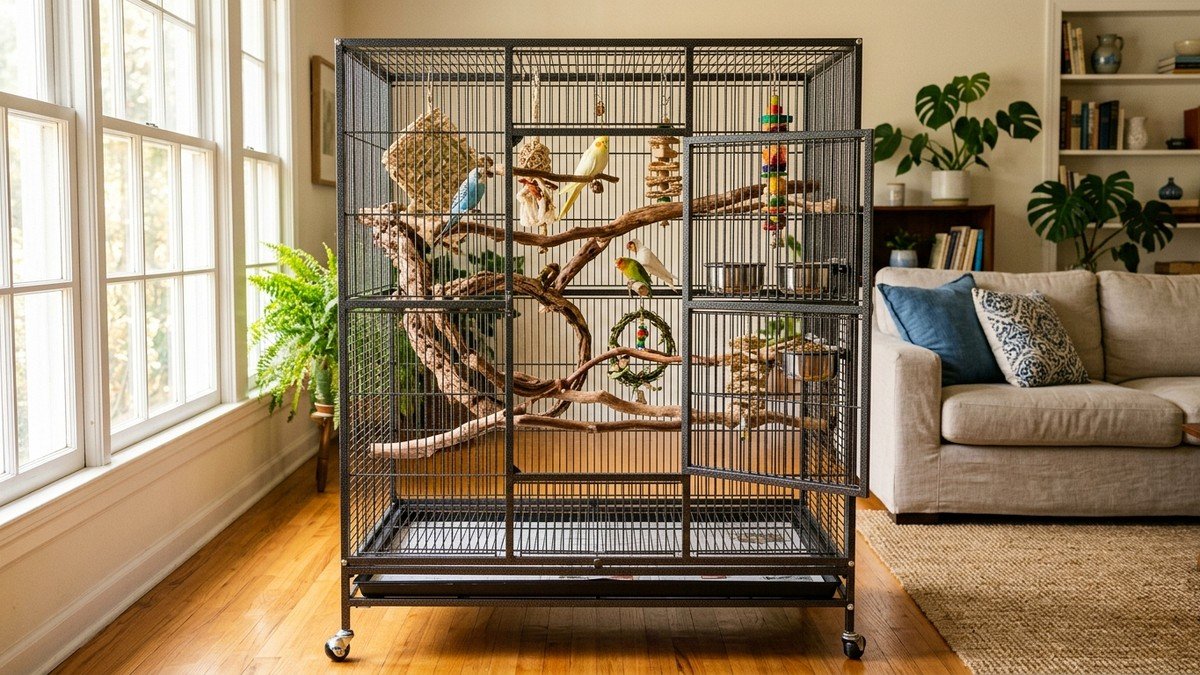
- Birds Fly Horizontally, Not Vertically: Parrots and songbirds do not fly like helicopters; their biomechanics require horizontal forward propulsion. A cage that is four feet tall but only 18 inches wide leaves zero room for wing extension, reducing flight to clumsy hopping.
- The Psychological Trauma of Round Cages: Prey species require corners. In rectangular cages, birds seek security in the back corners when startled. In round cages, birds feel perpetually exposed from 360 degrees, developing neurotic circling behaviors and severe feather picking.
- Pinching Bar Apexes: Round cages have bars that taper closely together at the ceiling dome, creating dangerous wedge traps that catch toes, leg bands, and beaks.
6. Toxic Heavy Metal Poisoning in Bird Cages
Parrots explore the world with their beaks, using them as a third foot to climb cage wire. Inexpensive or vintage cages pose lethal heavy metal toxicosis risks:
- Zinc and Galvanized Hardware: Galvanized wire mesh and cheap electroplated weld joints contain high levels of zinc. Ingesting tiny oxidized metal flakes causes acute zinc poisoning, leading to vomiting, seizures, kidney necrosis, and death.
- Lead Paint Chips: Antique brass or wrought iron cages painted with old enamel or lead primers flake off under beak chewing. Lead is an irreversible neurotoxin in birds.
- The Gold Standard: Wrought Iron Powder-Coated or Stainless Steel: Always invest in cages certified non-toxic with baked powder coating or 304-grade medical stainless steel that withstands intense beak chewing without chipping.
7. Preventing Bumblefoot (Pododermatitis) with Varied Perches
Most commercial cages come equipped with standard smooth wooden dowel rods or plastic perches. Forcing a bird to perch on uniform dowels of identical diameter creates a serious veterinary disease known as bumblefoot (ulcerative pododermatitis):
When a bird stands on a smooth dowel 24 hours a day, the exact same pressure points on their plantar foot pads bear their entire body weight. Blood circulation is restricted, skin calluses ulcerate, and staphylococcal bacteria enter the foot bones. Equip cages with natural, bark-on branches of varying thicknesses (manzanita, ribbonwood, java wood, bottle brush) to exercise tendon flexion and distribute weight evenly across the foot.
8. The Golden Rule of Cage Clutter and Toy Spacing
Even a spacious flight cage becomes restrictive if overpacked with toys. Follow the 60-40 Rule for avian interior decorating:
- Preserve 60 Percent Open Flying Space: Ensure the central flight corridor between perches remains completely unobstructed by toys, ropes, or ladders so your bird can execute complete horizontal wing beats.
- Rotate Toys on a Weekly Schedule: Provide three or four engaging foraging and shredding toys at a time rather than cramming ten toys into the cage at once. Swap toys every weekend to prevent boredom.
- Keep Food and Water Dishes High: Mount feeding bowls above the lower perches so falling droppings never contaminate clean seed, pellets, or fresh drinking water.
Frequently Asked Questions (FAQs)
1. Why is horizontal cage width more important than vertical height?
Birds fly horizontally rather than straight up like a helicopter. Tall, narrow decorative cages restrict natural wing flaps, causing wing muscle atrophy. A wider rectangular flight cage provides authentic exercise and gliding space.
2. What happens if bird cage bar spacing is too wide?
If bar spacing is too wide, small birds can squeeze their head between the bars. Because the skull’s rear is wider than the beak, the bird becomes trapped, leading to panic, broken necks, or fatal strangulation.
3. Are round bird cages safe for parrots?
No, round cages are considered unsafe by avian veterinarians. They lack geometric corners where birds instinctively retreat for security, causing psychological stress. Furthermore, bars converge tightly at the top crown, creating pinching hazards for toes.
4. What is the best material for bird cages?
Non-toxic powder-coated wrought iron or 304 medical-grade stainless steel are the best cage materials. Avoid cheap cages made with galvanized wire or zinc and lead soldering, as chewing on them causes fatal heavy metal toxicosis.
5. What is the minimum cage size for a cockatiel?
The absolute minimum cage dimension for a single cockatiel is 24 inches wide by 24 inches deep by 30 inches tall, with a bar spacing of 1/2 to 5/8 inch to protect their long tail feathers and prevent wing clipping.
6. How many perches and toys should be inside a cage?
Equip the cage with 3 to 4 natural hardwood perches of varying diameters (such as dragonwood or manzanita) and 3 to 4 rotating shredding toys, leaving at least 60 percent of the central interior volume open for clear flight.
What happens if bar spacing is even 1/8 inch too wide for my bird?
Bar spacing that is too wide permits the bird to force their skull through the wire. Once through, their flared occipital bones lock behind the bars, causing panic, cervical dislocation, and rapid asphyxiation.
Can you keep a bird cage directly in front of an open window?
No. Direct sunlight through glass can cause lethal hyperthermia within 30 minutes, while drafts trigger respiratory illness. Furthermore, spotting outdoor hawks through glass causes severe chronic panic.