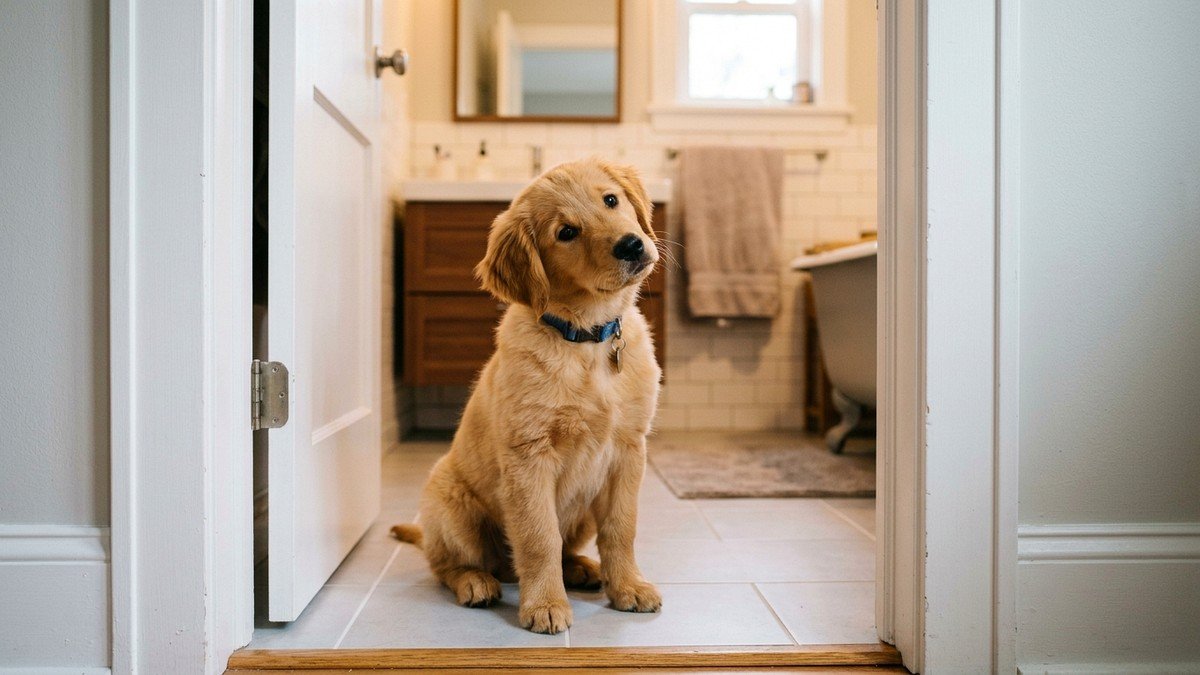
For dog owners everywhere, personal privacy is essentially an obsolete concept. You step into the bathroom, attempt to pull the door shut, and instantly an eager wet nose nudges through the crack, followed by your loyal companion trotting in to sit attentively beside the porcelain throne. While this shadow-like loyalty often inspires humorous commentary, canine ethologists confirm that following humans into the bathroom is deeply rooted in evolutionary pack protection, olfactory curiosity, and social attachment.
Key Pack Dynamic
In canine packs, going to the bathroom is a moment of total physical vulnerability. When your dog accompanies you into the restroom, it is not invading your space, it is actively volunteering as your personal bodyguard.
1. The Protective Pack Guarding Instinct
Have you ever noticed that when your dog relieves itself outside on the lawn, it makes unwavering eye contact with you? That gaze is not embarrassment. In the wild, an animal in a squatting position cannot defend itself or flee swiftly from an ambushing predator. Your dog looks at you during elimination to confirm that you are watching for danger.
When you enter the bathroom, your dog recognizes that you are engaging in the same vulnerable routine. Driven by centuries of cooperative pack genetics, your dog positions itself near you to stand guard, reciprocating the security you provide during outdoor excursions.
2. Velcro Dog Syndrome and Breed Genetics
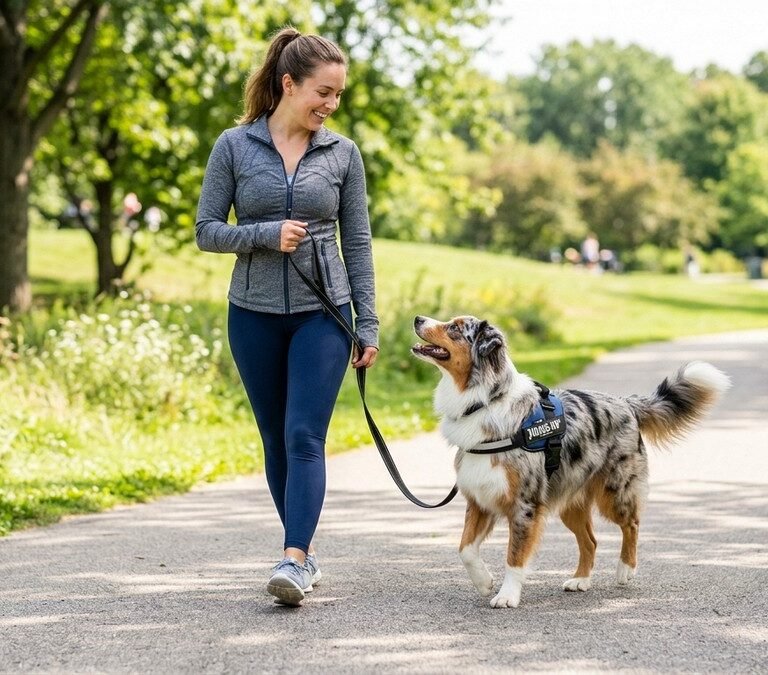
Certain dog breeds are affectionately referred to as velcro dogs because they maintain physical proximity to their human handlers at all times. Working, herding, and sporting breeds were selectively bred for generations to maintain close handler focus.
Breeds like Golden Retrievers, German Shepherds, Dobermans, and Australian Shepherds possess an intrinsic desire to monitor your movement. When you stand up from the sofa, their internal drive urges them to shadow you, regardless of whether you are heading to the kitchen for dinner or stepping into the shower.
3. Curiosity and Olfactory Wonderland
To a creature possessing up to 300 million olfactory receptors, your bathroom is a captivating treasure trove of sensory information. Towels, laundry hampers, and bathmats absorb concentrated human scent molecules that provide dogs with comforting chemical signatures.
Furthermore, closed doors represent an intolerable barrier to canine curiosity. When a door is closed, it blocks airflow and cuts off communication. Dogs naturally investigate what exciting, secretive activities might be occurring behind the barrier.
Healthy Companionship vs Separation Anxiety
Differentiating between normal affection and pathological anxiety ensures your dog receives proper behavioral support:
| Behavioral Metric | Healthy Pack Affection | Clinical Separation Anxiety |
|---|---|---|
| Response to Closed Door | Sniffs bottom of door, lies down calmly outside | Frantic scratching, clawing carpet, whining, barking |
| Emotional State in Bathroom | Relaxed posture, soft eyes, curls up on bathmat | Pacing, dilated pupils, heavy panting, trembling |
| Independence in Other Rooms | Chews toys or naps peacefully in another room | Unable to settle without physical human contact |
| Action Needed | Enjoy the loving bond and mutual trust | Consult a certified veterinary behaviorist |
Helpful Related Guides for Dog Owners
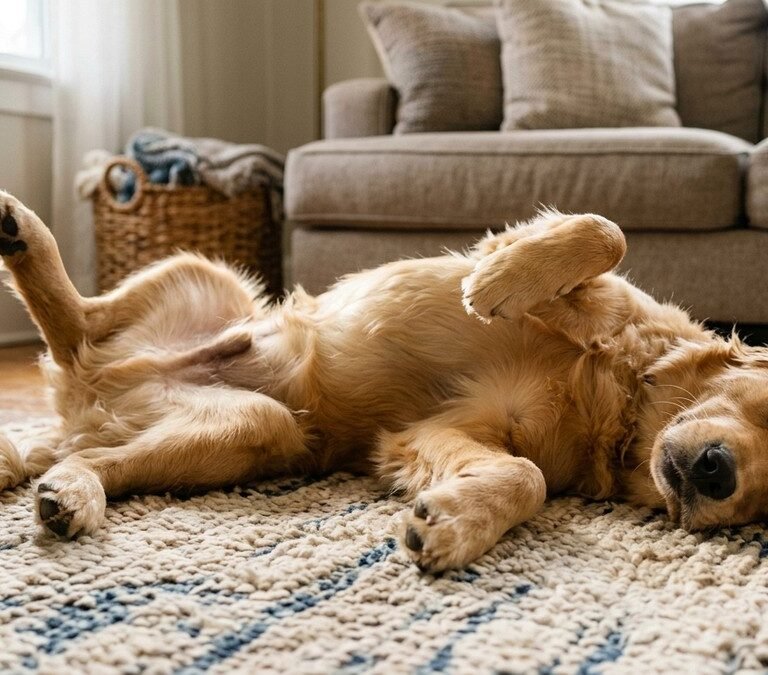
Learn more about fascinating canine behavior and daily bonding in our detailed guides on why dogs sleep on their backs and why dogs howl at sirens.
5. Olfactory Fascination with Bathroom Scents and Humidity
To human beings, a bathroom is a private hygiene space. To a dog with up to 300 million olfactory receptors, your bathroom is a captivating chemical information library:
- High Humidity Vaporizes Odor Molecules: Steam from hot showers and running sinks binds with airborne scent particles, magnifying human pheromones and scents that your dog’s vomeronasal (Jacobson’s) organ processes enthusiastically.
- Scent-Marked Towels and Laundry: Used bath towels, washcloths, and bathrobes are concentrated deposits of your personal skin oils and sweat, providing powerful sensory comfort to your companion.
- Cool Surfaces and Flowing Water: Porcelain toilet bowls, cool ceramic tiles, and dripping faucets offer novel temperature gradients and sound stimulation that dogs naturally investigate.
6. The Mutual Vulnerability Dynamic in Canine Groups
When your dog defecates in the yard, notice how they gaze directly into your eyes. In canine ethology, the physical act of elimination places an animal in an awkward, compromised physical posture where they cannot defend themselves against ambush.
Your dog looks at you during potty breaks to confirm that you are standing guard. Reciprocally, when you sit down in the bathroom, your dog assumes you are now in that exact same defenseless state. They sit facing the bathroom door with their back toward you, actively acting as a loyal sentinel guarding your blind spots.
7. Healthy Velcro Dog Behavior vs True Pathological Separation Anxiety
Following you to the bathroom is typically a sign of healthy attachment, but owners must recognize when shadow-dog behavior crosses into pathological attachment:
- Healthy Velcro Dog Traits: Trots happily behind you into the bathroom, curls up on the bath mat or leans gently against your knees, but shows zero distress if you close the bathroom door and goes back to sleep on the sofa.
- Pathological Separation Distress: Frantically claws at the bathroom door, digs at carpets, whines in acute panic, hyperventilates, or attempts to force the door open if separated from you for even thirty seconds.
8. Establishing Respectful Bathroom Boundaries and Independence
If you prefer private bathroom moments or want to cultivate greater independence in your companion, practice these boundary-setting protocols:
- The ‘Place’ Command with High-Value Enrichment: Teach a reliable ‘Go to Place’ cue on an orthopedic mat located outside the bathroom door. Provide a frozen peanut butter Kong or lick mat that occupies them for 20 minutes while you shower.
- Micro-Absence Conditioning: Close the bathroom door for five seconds, step out, and calmly reward relaxation without making a big fuss or high-pitched greeting. Gradually extend closed-door durations.
- Avoid Accidental Reinforcement: Petting, talking to, or giving treats to a dog scratching at the bathroom door accidentally rewards demanding behaviors. Wait for a moment of quiet before opening the door.
Frequently Asked Questions (FAQs)
1. Why does my dog sit and stare at me while I use the bathroom?
In wild canine psychology, eliminating is a moment of extreme physical vulnerability. When you enter the bathroom, your dog positions itself nearby as a protective sentinel to guard you from potential threats, reciprocating what they believe you do for them on walks.
2. Is following you to the bathroom a sign of separation anxiety?
Not necessarily. If your dog calmly rests outside or near your feet, it is simply healthy pack attachment and curious companionship. However, if closing the door triggers frantic whining, scratching, howling, or panic, clinical separation anxiety is likely.
3. What makes certain dogs velcro dogs?
Velcro dogs are breeds or individuals with intense social attachment drives, often bred specifically for working closely alongside humans, such as Golden Retrievers, Labradors, German Shepherds, and Border Collies.
4. Why do dogs hate closed doors in the house?
Canines are natural territory patrollers and social animals. A closed door creates an artificial barrier that prevents them from monitoring pack safety, investigating interesting scents, and checking on family members.
5. Does my dog think the bathroom smells interesting?
Yes. Bathrooms contain high concentrations of personal human scents on towels, bathmats, and hampers, alongside novel sounds like running water and flushing toilets, which pique your dog’s intense olfactory curiosity.
6. How can I teach my dog to wait outside the bathroom calmly?
Teach the place command using a comfortable mat outside the doorway. Reward your dog with a long-lasting chew toy or frozen peanut butter KONG on their mat while you close the bathroom door for short, progressive intervals.
Why do dogs specifically try to barge through a cracked bathroom door?
Canine curiosity is driven by barrier frustration. A partially open door signals access, making the smells and sounds behind the door irresistible to an opportunistic companion.
Why does my dog lie directly on the cold bathroom tile floor?
Ceramic and porcelain bathroom tiles act as excellent thermal heat sinks, rapidly drawing core heat out of your dog’s body and keeping them cool.