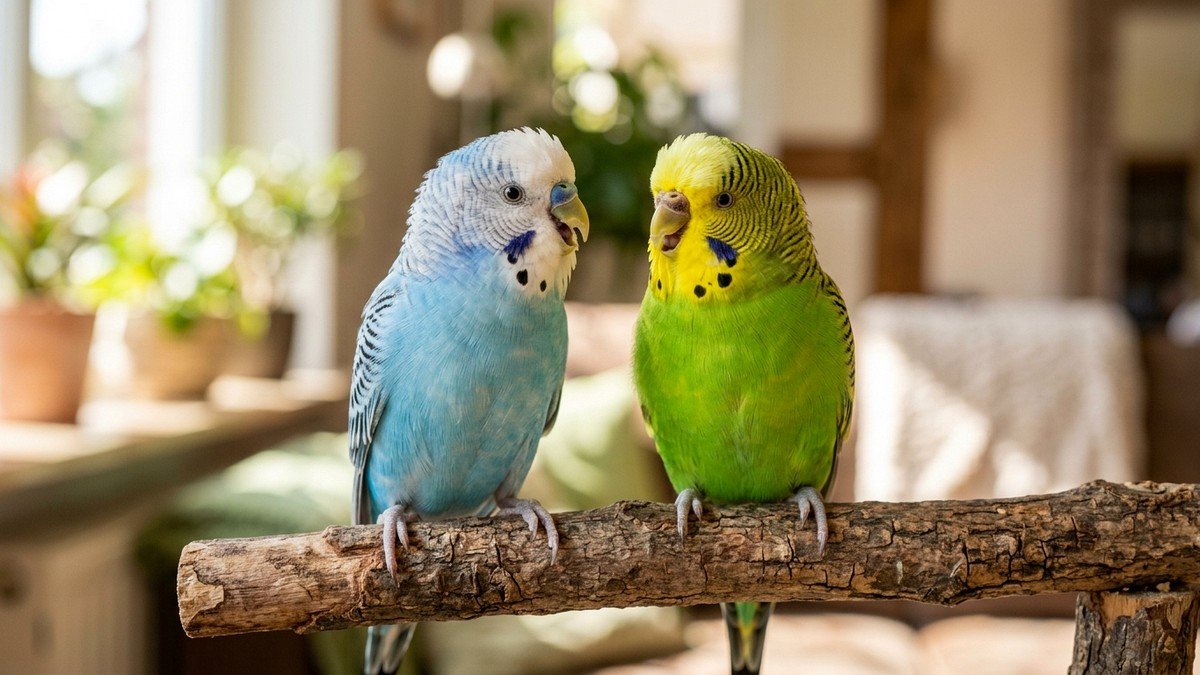
Budgerigars, commonly known as budgies or parakeets, are among the most communicative and vocal companion animals in the world. From soft, rhythmic morning melodies to ear-piercing afternoon squawks, every sound a budgie makes conveys critical information about its emotional state, physical security, and social desires. Decoding these vocalizations transforms the way pet parents interact with their feathered companions.
Key Avian Principle
In the Australian wild, budgerigars survive in massive nomadic flocks where acoustic communication is essential for survival. A vocal budgie is almost always a healthy, engaged bird expressing its natural flock instincts in your living room.
1. The Evolutionary Purpose of Budgie Vocalizations
To understand why your budgie chirps, one must appreciate its evolutionary heritage. In the arid Australian outback, wild budgies travel in flocks numbering hundreds or thousands of individuals. In such vast environments, dense shrubbery makes visual contact difficult, forcing birds to rely on distinct acoustic frequencies.
Chirping serves as an ongoing census. A single short chirp translates roughly to: Here I am, where are you? When your domestic pet chirps from across the house, it is performing a contact call to confirm the location and safety of its human flock.
2. Decoding the Common Sounds of Budgies
Budgerigars maintain an extensive acoustic vocabulary. Recognizing the differences between these sounds provides immediate insight into your bird’s wellbeing:
Gentle Chirping and Warbling
A steady, musical warble filled with soft whistles and trills indicates supreme comfort and contentment. You will often observe your budgie fluffing its cheek feathers, sitting on one tucked foot, and singing softly to itself while digesting meals or soaking in morning sunshine.
Rhythmic Beak Grinding
A distinct rasping or clicking sound produced as the bird rubs its lower mandible against the interior ridge of the upper beak. This is the avian equivalent of a cat’s purr. It indicates total security and is the classic precursor to deep sleep.
Alarm Screaming and High-Pitched Squawking
Harsh, discordant, and piercing shrieks indicate alarm, distress, or urgent demands. A shadow passing outside the window, a novel household appliance, an unfamiliar visitor, or an empty water dish can provoke immediate alarm calling to warn the flock.
Hissing and Territorial Chattering
A dry, raspy hiss indicates defensive aggression. Budgies hiss when their personal space is invaded, when defending a nest box, or when cornered by an intrusive hand. If your bird hisses, step back and give it space.
Budgie Sound and Body Language Reference
Correlating vocal sounds with physical posture is the key to accurate behavioral diagnosis:
| Vocalization | Accompanying Posture | Emotional State | Action Needed |
|---|---|---|---|
| Soft Warble / Chirp | One foot tucked, relaxed feathers | Content and calm | Enjoy the music, talk back gently |
| Beak Grinding | Fluffed cheek feathers, half-closed eyes | Drowsy and peaceful | Lower lights for bedtime |
| Loud Squawk | Rigid neck, sleek feathers, pacing perch | Alarmed or lonely | Check environment for threats, answer call |
| Hissing | Crouched forward, open beak | Defensive aggression | Withdraw hands immediately |
| Continuous Singing | Bobbing head, dilated pupils (pinning) | Playful courtship or excitement | Offer foraging toys or training |
3. Environmental Triggers That Amplify Chirping
Budgies are acoustic mimics that naturally harmonize with ambient environmental frequencies. Common household sounds frequently trigger enthusiastic chirping bouts:
- Running Faucets and Waterfalls: In the wild, rushing water indicates an oasis. Domestic birds instinctively chirp and attempt to bathe when they hear water running.
- Vacuum Cleaners and White Noise: Consistent mechanical white noise acts as acoustic cover in the wild. Hearing white noise signals to budgies that no predators are stalking nearby, inspiring energetic song.
- Music and Television: Budgies have distinct musical preferences and will sing along to acoustic guitars, flutes, and classical melodies.
Helpful Related Guides for Bird Owners
If you are seeking deeper insights into pet bird wellness and behavior, explore our comprehensive guides on why parrots pluck their feathers and our complete directory of safe and toxic foods for pet birds.
Frequently Asked Questions (FAQs)
1. Why do budgies chirp constantly in the morning?
Budgies chirp enthusiastically in the morning as an evolutionary flock behavior known as contact calling. In the wild, morning choruses confirm that all flock members survived the night and coordinate daily foraging activities.
2. What does it mean when a budgie grinds its beak?
Beak grinding is a definitive sign of safety, relaxation, and contentment. Budgies typically grind their upper and lower beaks together right before falling asleep or when resting quietly on their favorite perch.
3. Why is my budgie squawking and screaming loudly?
Loud, repetitive squawking signals alarm, frustration, fear, or boredom. A budgie may scream if it spots an unfamiliar object, senses danger, lacks environmental stimulation, or calls out frantically for human companionship.
4. Do budgies chirp when they are angry or territorial?
Yes, agitated budgies produce sharp, rapid chattering accompanied by a distinct hissing sound. When defending their food bowl or sleeping perch, they may lean forward with feathers sleeked back and beak open in warning.
5. How can I quiet down a budgie that will not stop chirping?
Provide structured environmental enrichment such as shredding toys, foraging treats, and natural perches. Ensure your budgie receives 10 to 12 hours of undisturbed darkness each night by covering the cage with a breathable, dark fabric.
6. Can budgies learn to mimic human speech instead of chirping?
Yes, budgerigars are among the most capable vocal mimics in the avian world. Male budgies in particular excel at learning human words, short phrases, and household whistles through consistent, patient repetition.