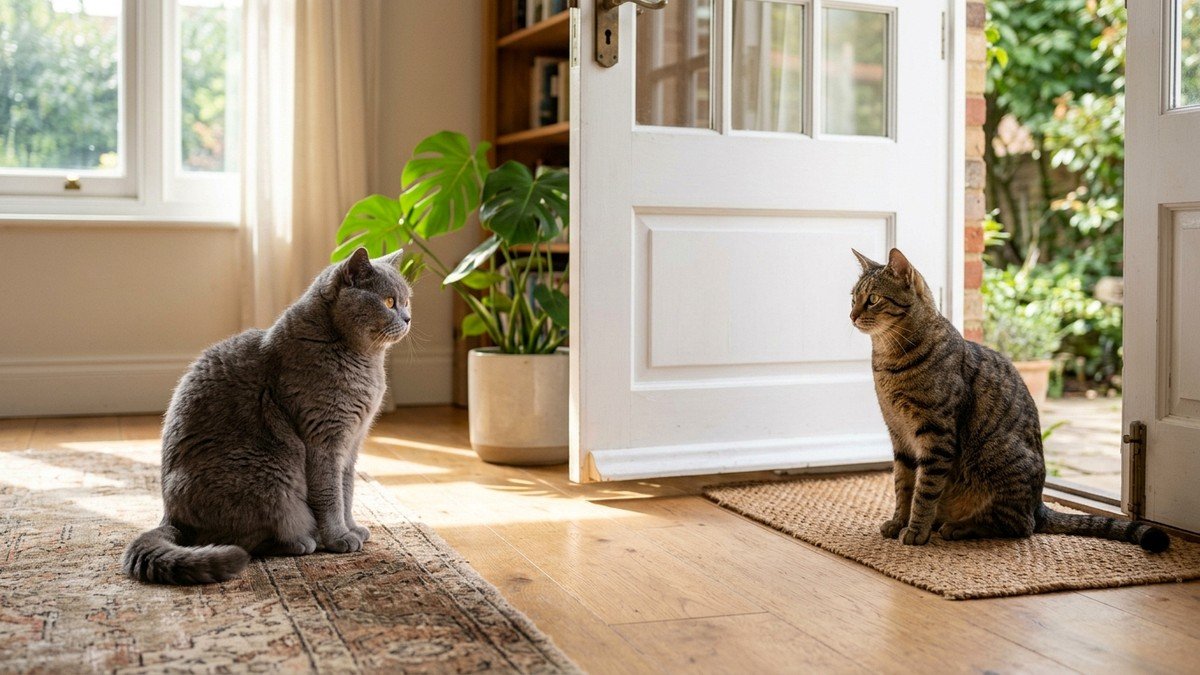
Bringing a new cat into your home is an exciting milestone, but expecting resident and newcomer felines to become immediate companions is one of the most common mistakes pet owners make. Unlike canines, which are social pack animals with genetic predispositions for group living, domestic felines are solitary territorial hunters. To a resident cat, an unfamiliar feline is an invasive threat to scarce resources, safety, and territory.
Golden Rule of Feline Integration
The secret to lifelong peaceful coexistence between cats is gradual scent desensitization and positive association. Cats accept changes in olfactory signatures long before they accept visual or physical presence.
Phase 1: The Sanctuary Room Setup
Before bringing the new cat through the front door, prepare a fully equipped, isolated sanctuary room. A quiet spare bedroom or home office works best. The sanctuary room must contain:
- A clean litter box placed away from feeding stations.
- Separate food and fresh water dishes.
- A vertical cat tree, scratching post, and cozy sleeping bed.
- Comforting hiding spots such as a cardboard box or carrier with soft blankets.
Upon arrival, transport the new cat directly into this room without allowing the resident cat to see it. Keep the door closed. This allows the newcomer to acclimate to unfamiliar environmental noises while the resident cat detects a new presence without direct confrontation.
Phase 2: Scent Swapping and Territory Trading
After 48 to 72 hours, begin the critical process of scent swapping. Cats recognize one another primarily through scent profiles rather than sight. Take a clean clean sock or hand towel and gently rub the cheeks and temporal scent glands of Cat A, then present the cloth to Cat B. Offer Cat B high-value treats alongside the cloth to build positive neural associations.
Once both cats investigate the cloths calmly, perform site swapping. Place the resident cat inside the sanctuary room while allowing the new cat to explore the rest of the house for 30 minutes. This allows each cat to explore the other’s territory and leave their scent marks without physical confrontation.
Phase 3: Mealtime Conditioning on Opposite Sides of a Closed Door
Feeding time creates powerful neurochemical associations. Begin serving both cats their favorite canned wet meals on opposite sides of the closed sanctuary room door. Position the bowls approximately five feet back from the door on each side.
Gradually move the bowls closer by several inches at each feeding session until both cats are eating comfortably right against the door. The goal is for each cat to associate the subtle scent and sounds of the other cat with the pleasure of gourmet food.
Phase 4: Visual Introduction with a Physical Barrier
When both cats eat peacefully against the closed door, introduce visual contact while strictly maintaining a physical barrier. Effective options include stacking two tall mesh baby gates in the doorway, installing a temporary screen door, or using an adjustable door strap that props the door open just two inches.
Continue feeding the cats their meals in full view of each other across the barrier. Keep these initial visual sessions brief (3 to 5 minutes). If both cats eat without tense posturing, staring contests, or flattening their ears, you can extend the duration and engage both cats with feather wand toys across the barrier.
Phase 5: Supervised Cohabitation and Free Roaming
Remove the barrier for brief, closely monitored interactions in a neutral living space. Ensure the room provides ample escape routes, elevated cat perches, and multiple hiding boxes so neither cat feels cornered.
Keep these interactions structured with engaging feather toys and tasty lickable treats. After 15 minutes of peaceful coexistence, return the new cat to the sanctuary room before any tension arises, ending each session on a triumphant note.
Step-by-Step Feline Introduction Protocol
Follow this sequential milestone checklist to ensure a harmonious integration:
| Phase | Core Objective | Standard Duration | Success Criteria to Advance |
|---|---|---|---|
| Phase 1: Sanctuary Isolation | Acclimation to home sounds | 2 to 4 days | New cat eats, uses litter, purrs in room |
| Phase 2: Scent & Territory Swap | Desensitize to olfactory marks | 3 to 5 days | Calm sniffing of cloths without hissing |
| Phase 3: Closed-Door Feeding | Pair scent with high-value meals | 4 to 7 days | Eating calmly within 6 inches of door |
| Phase 4: Barrier Visual Contact | Visual contact without aggression | 5 to 10 days | No staring contests or lunging at screen |
| Phase 5: Supervised Cohabitation | Shared territory integration | 1 to 2 weeks | Relaxed postures, peaceful sharing of space |
Helpful Related Guides for Multi-Cat Homes
Learn how to decode subtle feline bonding behaviors and contentment signals with our in-depth guides on why cats knead blankets and why do cats purr.
Frequently Asked Questions (FAQs)
1. How long does it take to successfully introduce two cats?
On average, a successful feline introduction takes anywhere from 2 to 6 weeks. Timelines vary depending on each cat’s prior socialization history, temperament, age, and territorial confidence. Rushing the process often results in chronic territorial aggression that takes months to undo.
2. Can I just let two cats work it out on their own?
No. Allowing cats to fight it out is dangerous and medically irresponsible. Unlike dogs, cats are solitary hunters that view unfamiliar felines as territorial threats. Unmanaged face-to-face meetings can cause severe bite abscesses, psychological trauma, and long-term territorial warfare.
3. What should I do if the cats hiss at each other through the door?
Mild hissing or growling under a door during the initial days is normal. Simply move their feeding dishes further away from the door to increase their comfort zone. Only progress to visual contact once both cats eat comfortably on either side of the barrier without hissing.
4. How do you break up a cat fight safely?
Never reach in with your bare hands, as redirected aggression can cause severe puncture wounds. Instead, drop a thick blanket over the aggressor, slide a sturdy piece of cardboard or couch cushion between them, or clap loudly to create a diversion, then separate them immediately.
5. Is it easier to introduce a kitten to an older cat?
Generally, adult cats perceive kittens under 4 to 5 months old as less of an immediate territorial threat than another adult cat. However, senior cats can become stressed by high kitten energy, so providing vertical sanctuaries and structured play for the kitten is vital.
6. What are positive signs that the introduction is working?
Encouraging milestones include slow blinking, soft body postures, relaxed tails held upright with a slight hook, mutual grooming (allogrooming), calm sleeping in the same room, and passing each other without rigid staring or blocked doorways.