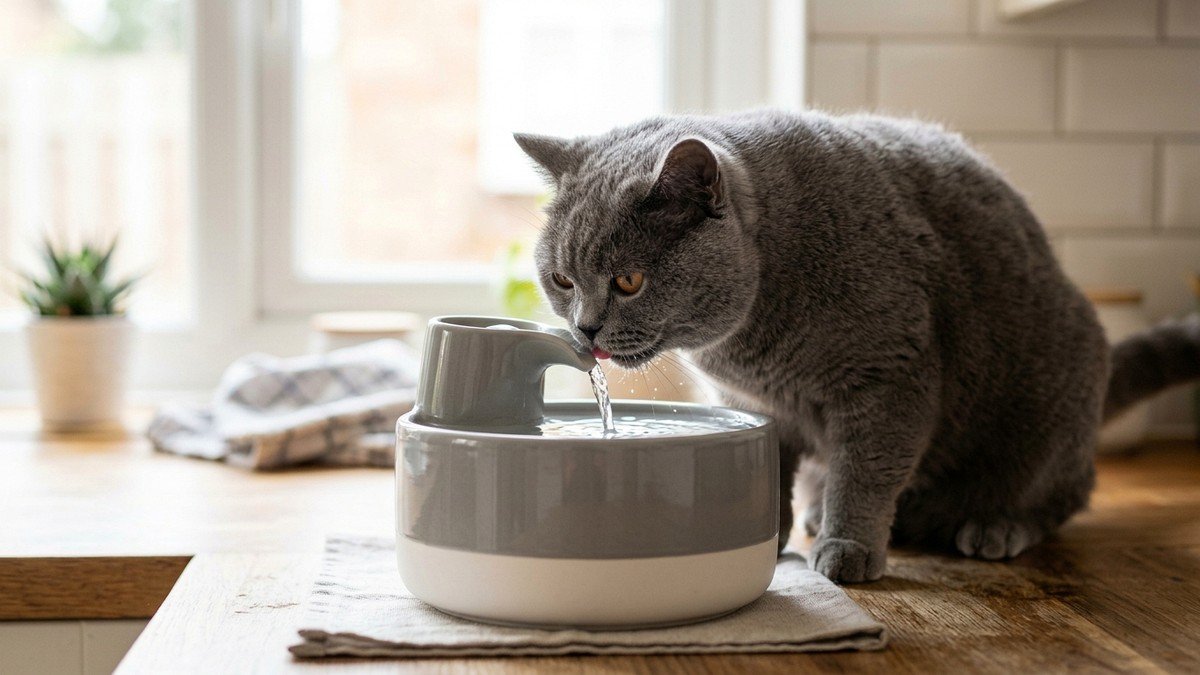
It is one of the most widespread challenges encountered by dedicated cat parents: you place a bowl of clean, fresh water on the floor, and your cat completely ignores it for days, or merely sniffs the rim and walks away. While canines lap up water enthusiastically after every walk, domestic felines possess an evolutionary biology that makes them notoriously prone to chronic, low-grade dehydration. Left unmanaged, poor fluid intake is the leading trigger for feline lower urinary tract disease (FLUTD) and chronic kidney failure.
Key Veterinary Principle
Domestic cats descended from the African wildcat (Felis lybica), an arid desert hunter programmed to extract nearly all its bodily hydration directly from the blood and tissues of fresh prey rather than drinking standing water.
1. The Desert Heritage and Low Thirst Drive
Because their ancestors survived in dry scrublands where standing watering holes were scarce and perilous, felines evolved a blunted thirst receptor mechanism. While a dog or human feels acute thirst at the slightest dip in blood volume, a cat’s thirst mechanism only activates after significant dehydration has already set in.
When fed an exclusive diet of dry kibble (which contains only 8 to 10 percent moisture), cats rarely drink enough supplemental water from a bowl to compensate, producing chronically concentrated urine that predisposes them to struvite crystals, urethral blockages, and progressive kidney damage.
2. Whisker Fatigue and Bowl Placement Mistakes
Often, a cat refuses to drink not because it does not require water, but because the physical water station is improperly configured:
- Whisker Fatigue: Feline whiskers are sensitive sensory instruments packed with nerve receptors. When forced to drink from deep, narrow bowls, their whiskers brush repeatedly against the sides, causing sensory overstimulation and avoidance.
- Water Next to Food Bowls: In nature, wild predators never drink water directly adjacent to a fresh kill because blood and entrails contaminate water sources. Placing water right beside food bowls instinctively repulses many cats.
- Water Near Litter Boxes: Cats refuse to drink within smelling distance of their elimination areas. Ensure water bowls are in completely separate rooms.
3. The Power of Flowing Pet Fountains
Standing water looks static, lacks oxygenation, and gathers dust. In contrast, circulating water from a ceramic or stainless steel pet fountain creates continuous surface ripple, light reflections, and pleasant bubbling sounds.
Veterinary studies demonstrate that switching a household cat from a stationary bowl to an automated circulating pet fountain increases daily fluid consumption by up to 40 percent, significantly reducing the recurrence of urinary tract infections.
Hydration Triage and Action Plan for Cats
Evaluate your cat’s hydration status and apply targeted dietary interventions:
| Hydration Sign | Physical Observation | Dehydration Severity | Recommended Action |
|---|---|---|---|
| Immediate Skin Snapback | Skin pinch over shoulders flattens in under 1 second | Normal (Well Hydrated) | Maintain wet food and fountain access |
| Sluggish Skin Return | Skin pinch takes 2 to 3 seconds to return | Mild to Moderate (5-7%) | Add bone broth to canned food immediately |
| Tacky / Dry Gums | Gums feel sticky, saliva is ropey and thick | Severe Dehydration (8-10%) | Veterinary clinic exam for subcutaneous fluids |
| Sunken Eyes & Lethargy | Eyes appear hollow, third eyelid visible, listless | Critical Emergency (>10%) | Emergency IV fluid resuscitation needed |
Helpful Related Guides for Cat Owners
Learn how to maintain optimal feline health and balanced nutrition by reading our guides on is Purina good for cats and why cats knock things over.
5. Feline Desert Ancestry and Low Thirst Mechanisms
To grasp why cats are notoriously poor water drinkers, we must study their ancestral origin. All modern domestic cats descend from the African wildcat (Felis lybica), an efficient apex predator evolved in the arid deserts of North Africa and the Middle East:
- Prey-Derived Hydration: In desert ecosystems with scarce watering holes, wildcats derived virtually 70 to 80 percent of their daily moisture intake directly from the blood, tissues, and cellular moisture of fresh rodent and avian prey.
- Hyper-Concentrated Renal Physiology: Because standing water was rare, cats developed highly efficient kidneys capable of producing extremely concentrated urine (specific gravity above 1.035), conserving body water at the expense of long-term kidney strain.
- The Dry Kibble Mismatch: Commercial dry extruded kibble contains only 8 to 10 percent moisture. A cat fed strictly dry kibble lives in a state of chronic sub-clinical dehydration, failing to drink enough water to compensate for dry food moisture deficits.
6. The Clinical Dangers: FLUTD, Urethral Plugs, and CKD
Chronic dehydration is the single greatest medical threat to domestic feline longevity, directly fueling life-threatening urinary emergencies:
- Urolithiasis (Bladder Stones and Crystals): Highly concentrated urine allows microscopic minerals (struvite and calcium oxalate) to precipitate into sharp microscopic crystals, tearing the bladder epithelium and causing intense hematuria (blood in urine).
- Urethral Obstruction in Male Cats: In male cats with narrow urethral passages, crystalline sludge and mucous plugs create a total urinary blockage. Without emergency unblocking within 24 to 48 hours, potassium build-up causes fatal cardiac arrest.
- Accelerated Chronic Kidney Disease (CKD): Over decades, processing hyper-concentrated waste overworks renal nephrons, leading to irreversible nephron sclerosis and kidney failure in over 30 percent of senior felines.
7. Whisker Fatigue and Subconscious Sensory Overload
One of the most overlooked reasons cats avoid traditional water dishes is whisker fatigue (mystacial sensory overload):
A cat’s vibrissae (whiskers) are dense tactile sensory organs rooted deep into subcutaneous nerve beds and vascular sinus capsules. When a cat dips their head into a narrow, deep bowl, their sensitive whiskers constantly brush against the sides. This continuous tactile friction sends repeated electrical signals to the brain, causing sensory discomfort that drives cats to walk away thirsty. Switching to wide, shallow ceramic or stainless steel saucers solves this problem immediately.
8. Homemade Hydration Boosters and Moisture Hacks
If your cat refuses to drink plain tap water, implement these proven veterinary hydration strategies:
- Pure Chicken or Bone Broth: Simmer chicken breasts or bones in plain water for two hours with zero onions, garlic, or added salt. Freeze the broth into ice cubes and melt one cube over canned wet food daily.
- Canned Tuna Juice Water: Mix two tablespoons of water from a can of low-sodium tuna packed in spring water into a fresh bowl of water to create an irresistible olfactory stimulus.
- Hydration Puree Treats: Incorporate commercial moisture-rich lickable purees (such as Inaba Churu or Delectables) into daily feeding routines, delivering 85 to 90 percent moisture.
Frequently Asked Questions (FAQs)
1. How much water should a cat drink daily?
A healthy adult cat typically requires about 3.5 to 4.5 ounces of water per 5 pounds of body weight each day. A 10-pound cat needs approximately 7 to 9 ounces of water daily, obtained through fresh drinking water and moisture in wet canned food.
2. Why do cats dislike drinking from regular water bowls?
Domestic cats dislike standing water because in the wild, stagnant water often harbors lethal bacteria. Furthermore, deep or narrow bowls cause whisker fatigue, where sensitive facial whiskers rub uncomfortably against the bowl edges.
3. Why do water fountains make cats drink more?
Felines are naturally attracted to moving, oxygenated water because running streams are biologically safer in nature. Fountains also generate appealing auditory sounds and light reflections that stimulate feline drinking curiosity.
4. How can I check if my cat is dehydrated at home?
Perform the skin tent test: gently pinch and lift the skin over your cat’s shoulder blades and release it. In a well-hydrated cat, the skin snaps back immediately. In a dehydrated cat, the skin tents and returns sluggishly. Dry tacky gums also confirm dehydration.
5. Can dehydration cause kidney disease in cats?
Yes. Chronic mild dehydration causes concentrated urine, putting immense metabolic stress on the kidneys and precipitating chronic kidney disease (CKD) and painful bladder crystals (FLUTD).
6. How can I add moisture to my cat’s diet without forcing them to drink?
Transition to premium wet canned food (which contains 75 to 80 percent moisture compared to 10 percent in dry kibble), add warm sodium-free bone broth to meals, or offer hydrating lickable treat pouches.
Why do cats prefer drinking water far away from their food bowl?
In the wild, predators avoid drinking water near fresh kills because decomposing prey can contaminate nearby water sources with bacteria. Placing water dishes five feet away from food dishes dramatically increases drinking.
How many ounces of water should a healthy indoor cat drink daily?
A healthy adult cat needs roughly 3.5 to 4.5 ounces of water per 5 pounds of body weight daily (including moisture consumed through canned wet foods).